Table of Contents
- What Drives Paver Patio Cost in 2026
- Concrete vs Paver Patio Cost Comparison: Which Wins Long-Term?
- The Paver Patio Installation Process: From Excavation to Joint Sand
- Factors Affecting Hardscape Installation Price
- Cost of Paver Patio Installation 2026: Material and Labor Breakdown
- ROI and Climate-Specific Considerations for Paver Patios
- Sustainable and Permeable Paver Options
- Frequently Asked Questions
Last Updated: September 14, 2026
What Drives Paver Patio Cost in 2026
The cost of paver patio installation 2026 comes down to four variables: material choice, site access, base depth, and labor rates in your area. Two patios of identical square footage can differ by thousands of dollars because of what sits underneath them. At Venice Pavers, we have over 30 years of experience.
Material selection is the most visible cost driver. Concrete pavers, brick pavers, and natural stone each carry different price points, and thickness matters as much as appearance. A 60mm paver rated for foot traffic costs less than an 80mm paver built for driveways. Travertine and flagstone sit at the higher end because of quarrying and finishing, while interlocking concrete pavers remain the workhorse for most residential patios.
Site access and project complexity change the math fast. A backyard reachable by wheelbarrow takes longer to build than one a skid steer can enter. Sloped yards, existing concrete to remove, and tight gate widths all add labor hours.
Material Selection and Paver Thickness
Paver thickness determines both price and lifespan. Standard patio pavers run 60mm; driveway-grade pavers run 80mm (Home). Thicker pavers cost more per square foot but resist shifting under load.
Site Access and Project Complexity
Access drives labor more than most homeowners expect. Narrow gates, steep grades, and long carries from the street to the build site all increase the crew hours required.
Concrete vs Paver Patio Cost Comparison: Which Wins Long-Term?
Concrete wins on upfront price; pavers win on lifetime value. A poured concrete slab typically costs less per square foot to install, but it cracks, settles, and stains in ways that are expensive to reverse. Pavers flex with ground movement and can be lifted, re-leveled, and reset individually.
Upfront Price vs Lifetime Value
The real comparison is not the invoice on day one. It is what you spend over 15 to 20 years. Concrete repairs often mean patching or replacing whole sections. Paver repairs mean pulling a few units, re-compacting the base, and relaying them.
|
Factor |
Concrete Patio |
|
|---|---|---|
|
Upfront cost |
Lower per sq ft |
Higher per sq ft |
|
Crack repair |
Patch or replace slab |
Reset individual pavers |
|
Curb appeal |
Flat, uniform look |
Textured, custom patterns |
|
Drainage options |
Limited without cutting |
Permeable systems available |
|
Lifespan with care |
Varies with soil movement |
Decades with proper base |
The Paver Patio Installation Process: From Excavation to Joint Sand
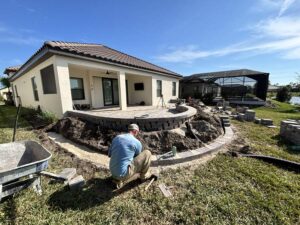
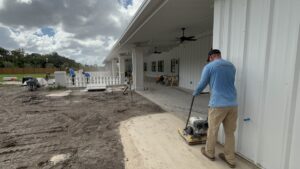
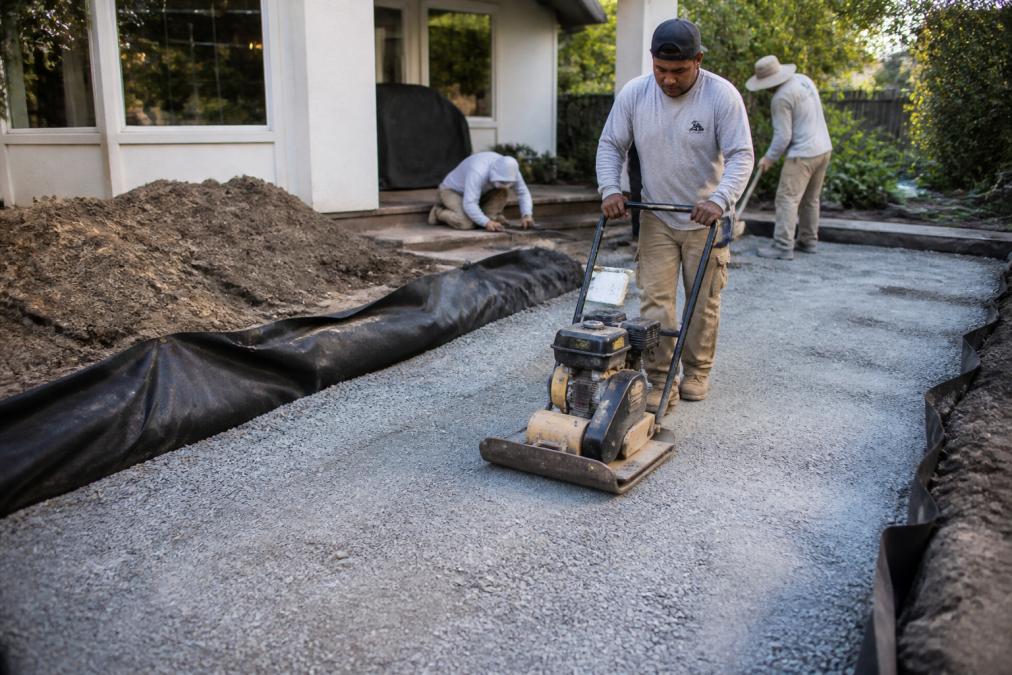
Every durable paver patio follows the same sequence: excavate, grade, lay geotextile fabric, build the crushed stone sub-base, compact in lifts, screed bedding sand, set pavers, cut edges, install restraints, sweep joint sand, and compact again. Skip a step and the patio tells on you within a season.
Excavation depth depends on the finished height you want plus the base thickness required for your soil. Grading establishes slope away from the house, usually a fall of roughly one inch per four feet, so water moves off the surface instead of pooling against the foundation.
Base Preparation and Drainage Planning
Base preparation is where patios succeed or fail. A common mistake is rushing compaction, which lets the sub-base settle unevenly and creates the sinking and rocking that homeowners call us about years later. Drainage planning decides where that water ends up.
Factors Affecting Hardscape Installation Price
Hardscape installation price responds to site conditions, labor rates, and material logistics more than to any single line item. Excavation, base material, and compaction consume the largest share of crew hours. Permitting and inspection fees vary by jurisdiction and should be confirmed with your local building department before work begins.
Free consultation & estimate →
Permits, Inspections, and Contractor Fees
Permit requirements for hardscaping differ by municipality, and some projects need none at all. Contractor fees reflect crew size, equipment, and how long the job runs. A reputable contractor will itemize labor separately from materials so you can see where the money goes.
Cost of Paver Patio Installation 2026: Material and Labor Breakdown
Labor and materials split the total investment roughly down the middle on most residential patios, though the ratio tilts toward labor as site complexity rises. A simple, flat, easily accessed patio might run 55% materials and 45% labor.
|
Cost Component |
What It Covers |
Main Driver |
|---|---|---|
|
Pavers |
Surface units by type and thickness |
Paver material and thickness |
|
Base stone |
Compacted crushed stone sub-base |
Base depth and square footage |
|
Bedding and joint sand |
Screeded bedding layer and joint fill |
Joint width and paver type |
|
Edging and restraints |
Perimeter containment |
Linear footage and edge conditions |
|
Geotextile fabric |
Separation layer over soil |
Soil type and drainage design |
|
Labor |
Excavation, grading, compaction, cutting, finishing |
Site access, complexity, crew rate |
|
Permits |
Local fees if required |
Jurisdiction |
|
Long-term care |
Sealing, joint sand refresh |
Climate and traffic |
ROI and Climate-Specific Considerations for Paver Patios
Sustainable and Permeable Paver Options
Frequently Asked Questions
What is the typical cost of installing a 20×20 paver patio?
A 20×20 patio covers 400 square feet. The paver patio cost depends on material choice, site conditions, excavation needs, and labor rates in your area. Concrete pavers, brick pavers, and natural stone like travertine or flagstone each carry different price points. Request a project estimate from a licensed contractor to get an accurate figure for your specific site conditions and design.
Is it cheaper to pour a concrete patio or use pavers?
Concrete typically has a lower upfront cost than pavers. However, the concrete vs paver patio cost comparison changes over time. Concrete cracks under soil movement, and repairs are visible patches. Pavers flex with the ground, individual units can be replaced, and the surface holds up to freeze-thaw cycles and heavy rain. Many homeowners find pavers deliver better long-term value when you factor in repair costs and curb appeal.
How much does a paver patio add to home value?
A well-installed paver patio improves curb appeal and usable outdoor space, both of which buyers notice. The exact return depends on your market, the quality of the installation, and how well the patio integrates with the home’s design. A patio with proper drainage, edging restraints, and quality joint sand holds its appearance longer, which supports resale value. Ask your contractor about ROI for your specific property.
What factors influence the total cost of paver installation?
Key factors affecting hardscape installation price include square footage, paver material and thickness, site preparation requirements, excavation depth, drainage solutions, base material (crushed stone and geotextile fabric), labor rates, permitting fees, and site access. Properties with tricky grading or poor drainage need more sub-base work, which increases the total investment. A detailed project estimate should itemize each of these.
Are there additional costs for drainage and base preparation?
Yes. Drainage and base preparation are essential but often underbid by contractors who cut corners. Proper work includes excavation, grading for slope, laying geotextile fabric, spreading and compacting crushed stone in layers, and installing edging restraints. If your property has drainage issues or sinking pavers, corrective grading adds to the cost. Skipping these steps leads to shifting, settling, and premature repairs.
Can I install a paver patio myself to save money?
DIY installation can reduce labor costs, but the base preparation and drainage planning are where most DIY projects fail. Without proper compaction, sub-base depth, and slope, pavers shift within a year or two. Renting compaction equipment, hauling base material, and cutting pavers also add up. Many homeowners find that hiring a certified installer saves money long-term because the patio lasts decades instead of needing repairs.
How long does a paver patio installation take?
Most residential paver patios take several days to a couple of weeks, depending on square footage, site access, weather, and complexity. The paver patio installation process includes excavation, base preparation, compaction, laying pavers, cutting edge pieces, and applying joint sand. Drainage work and permitting can extend the timeline. Your contractor should provide a schedule with the project estimate.
What maintenance costs should I expect after installation?
Paver patios need periodic joint sand replenishment and occasional cleaning. Paver sealing every few years helps protect the surface and lock in joint sand. If a paver cracks or shifts, individual units can be replaced without tearing out the whole patio. Budget for sealing and minor repairs, but compare that to concrete resurfacing or replacement costs over the same period.