Table of Contents
- Why High Humidity Demands a Different Paver Sealer Strategy
- Water-Based vs. Solvent-Based Paver Sealer: Which Performs in Humid Conditions
- Penetrating and Film-Forming Sealers: Moisture Resistance and Breathability
- How Long Does Paver Sealer Take to Dry in Humid Weather
- Best Time to Seal Pavers: Humidity, Temperature, and Weather Windows
- Paver Sealer Application Temperature and Humidity: Critical Thresholds
- Protecting Your Investment: Long-Term Durability in Harsh Coastal Climates
- Frequently Asked Questions
Last Updated: October 18, 2026
Why High Humidity Demands a Different Paver Sealer Strategy
High humidity creates unique challenges for paver sealers. Moisture in the air affects how sealers cure, adhere, and perform over time. When you’re choosing the best paver sealer for high humidity climates, you’re not just picking a product, you’re solving a moisture problem that standard sealers often can’t handle.
At Venice Pavers, we’ve worked with countless homeowners facing this exact issue. Pavers that looked perfect after installation start showing haze, discoloration, or loss of protection within months. The root cause? The sealer wasn’t designed for the moisture conditions in humid environments. Water vapor gets trapped between the sealer and the paver surface, creating a cloudy appearance and compromising the seal’s effectiveness.
The real challenge is that humidity affects application conditions, curing time, and long-term durability. A sealer that works beautifully in dry climates may fail spectacularly in humid ones. Understanding this difference is the first step toward protecting your investment.
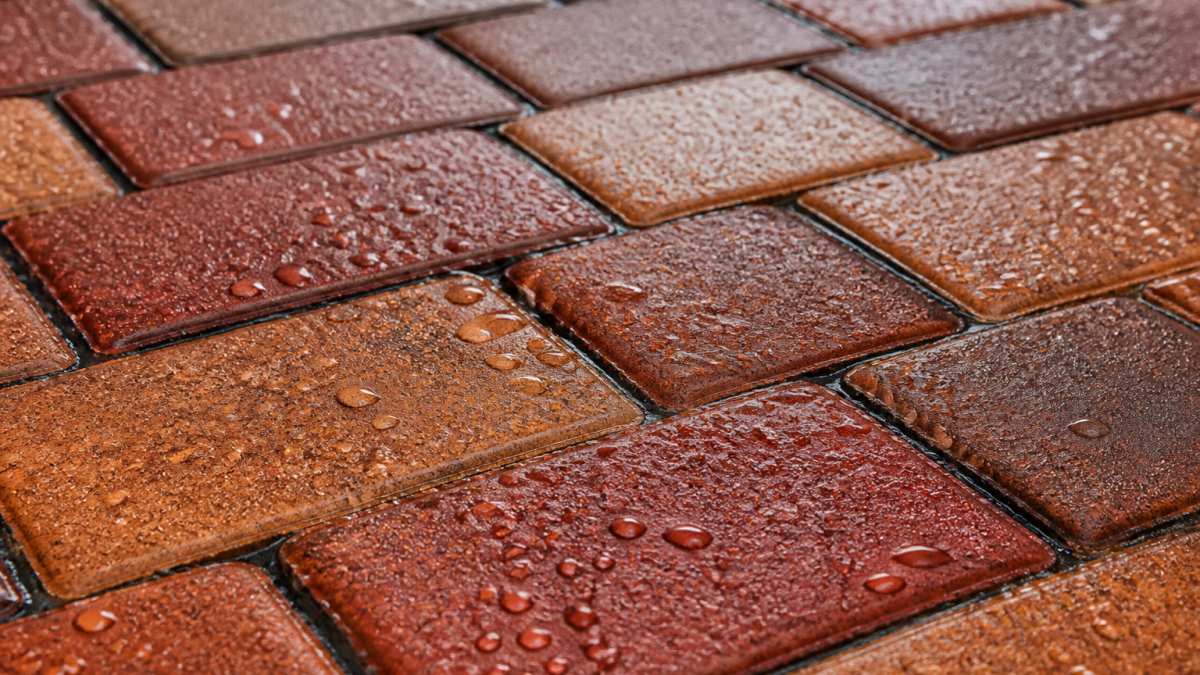
Water-Based vs. Solvent-Based Paver Sealer: Which Performs in Humid Conditions
Water-based sealers and solvent-based sealers behave very differently in high humidity. The choice between them determines whether your pavers stay protected or develop problems within a season.
Water-based sealers are easier to apply and emit fewer fumes, but they’re sensitive to humidity during curing. They require longer drying times in humid air, and moisture can interfere with the curing process. If relative humidity is too high when you apply a water-based sealer, the water in the product can’t evaporate properly. This traps moisture under the sealer film, causing haze or whitening that’s difficult to remove.
Solvent-based sealers cure faster and handle humidity better during application. The solvent evaporates more readily than water, even in moist air. This makes them more forgiving in humid climates. However, solvent-based products have higher VOC emissions and require proper ventilation. They’re also more expensive and require careful handling during application.
For humid environments, solvent-based sealers generally outperform water-based ones, but only if you apply them under the right conditions. Timing and humidity control matter more with solvent-based products than with water-based ones.
Penetrating and Film-Forming Sealers: Moisture Resistance and Breathability
Penetrating sealers and film-forming sealers work in fundamentally different ways. Understanding the distinction helps you choose the right one for humid climates.
Penetrating sealers soak into the paver surface and create protection from within. They don’t form a visible coating. This approach offers a key advantage in humid climates: breathability. Penetrating sealers allow water vapor to escape from the paver, preventing moisture buildup underneath. They’re less prone to haze and whitening because they don’t trap moisture on the surface.
Film-forming sealers sit on top of the paver and create a protective layer you can see and feel. They provide stronger stain protection and often enhance color. The downside: they can trap moisture if applied in high humidity. Water vapor gets caught beneath the film, leading to the hazy appearance many homeowners encounter.
For high humidity climates, penetrating sealers are often the better choice. They maintain breathability and reduce the risk of moisture-related problems. Film-forming sealers can work, but application conditions become critical. You’ll need lower humidity levels and careful timing to avoid trapping moisture.
How Long Does Paver Sealer Take to Dry in Humid Weather
Drying time in humid conditions is not a single number, it is a function of relative humidity, surface temperature, dew point spread, airflow, and film thickness. Treating it as a fixed clock is the most common reason DIY sealer jobs fail in humid climates.
Baseline drying windows. In moderate conditions (roughly 50-70% relative humidity, 70-80°F surface temperature, light breeze), most water-based sealers dry to the touch in 2-4 hours and reach full cure in 24-48 hours. Solvent-based sealers typically dry to the touch in 1-2 hours and cure in 24 hours. Penetrating sealers often feel dry within 1-2 hours because there is no film to harden, but chemical cure still takes 24 hours or more.
How humidity stretches those windows. When relative humidity climbs above 80%, water-based products can take 8-12 hours to dry to the touch and 72 hours or longer to fully cure, because water evaporation slows as the air approaches saturation. Solvent-based products are less sensitive but still stretch to 4-6 hours touch-dry and 36-48 hours full cure. Film-forming products, water- or solvent-based, are the slowest because the entire film thickness must release carrier and crosslink at the surface.
The dew-point rule that matters more than humidity percentage. Relative humidity alone is a weak guide. The number that predicts condensation and hazing is the spread between the pavement surface temperature and the dew point. If the surface temperature is within about 5°F of the dew point, moisture can condense on the pavers during or after application, trapping water under the film and producing white haze. A practical go/no-go test: measure surface temperature with an infrared thermometer and compare it to the dew point from a local weather app. If the spread is under 5°F, do not apply. If it is 5-10°F, apply only in the morning while the surface is warming, not in the evening while it is cooling toward the dew point.
Surface temperature, not air temperature. Air temperature of 75°F can pair with a paver surface of 95°F in direct sun or 65°F in deep shade. Most manufacturers specify application between 50°F and 85-90°F surface temperature. Above 90°F, solvent flashes off too fast and water-based films skin over before the carrier escapes, causing bubbles and trapped moisture. Below 50°F, crosslinking slows or stops.
Airflow and shade. A shaded, wind-sheltered patio dries two to three times slower than an open, breezy one. In humid climates, shaded north-facing or tree-covered hardscapes are the highest-risk sites. If airflow is poor, extend the no-rain window and no-traffic window by at least 50%.
Practical no-traffic and no-rain windows.
|
Condition |
Touch-dry |
Full cure |
Minimum no-rain window |
|---|---|---|---|
|
Moderate humidity (50-70%) |
2-4 hrs (water), 1-2 hrs (solvent) |
24-48 hrs |
24 hrs |
|
High humidity (70-85%) |
6-10 hrs (water), 3-5 hrs (solvent) |
48-72 hrs |
48 hrs |
|
Very high humidity (>85%) or dew-point spread <10°F |
Do not apply |
, |
, |
How to verify cure before walking on it. Press a clean, dry finger or paper towel onto an inconspicuous spot. If it feels tacky, leaves a print, or the towel sticks, cure is incomplete regardless of elapsed time. Wait and recheck every few hours. Foot traffic on a tacky film embeds dirt and creates permanent marks.
Best Time to Seal Pavers: Humidity, Temperature, and Weather Windows
Timing your sealer application is the difference between success and failure in humid climates. The best time to seal pavers depends on multiple factors working together.
Free consultation & estimate →
Temperature range: Most paver sealers require temperatures between 50-85°F during application and curing. In humid climates, this window is often early morning or late afternoon. Midday heat combined with humidity can cause the sealer to cure too quickly on top while the bottom remains wet, trapping moisture.
Humidity threshold: Try to apply sealers when relative humidity is below 85%. This gives the product time to cure properly without trapping excess moisture. In humid climates, this often means applying in early morning before the day warms up and humidity rises.
Weather forecast: Check for at least 48-72 hours of dry weather after application. Rain during curing may wash away the sealer or causes permanent damage. A single rain event during the curing window can ruin weeks of planning.
Venice Pavers recommends Water Based Sealers ONLY.
Paver Sealer Application Temperature and Humidity: Critical Thresholds
Application conditions determine whether your sealer bonds properly to the pavers. Temperature and humidity work together, you can’t ignore one and focus on the other.
Most sealers have a minimum temperature requirement of 50°F. Below this, the product won’t cure properly. A maximum temperature threshold around 85-90°F exists because excessive heat causes the sealer to cure too rapidly on the surface while remaining wet underneath. This traps moisture and causes haze.
Protecting Your Investment: Long-Term Durability in Harsh Coastal Climates
Coastal and persistently humid climates stress sealers in ways that dry-climate guides rarely address: salt-laden air, relentless UV, warm nights that slow cure, and frequent rain that erodes joint sand. Durability here is less about picking the hardest film and more about matching the product to the site and diagnosing failures before they compound.
What actually degrades a sealer in humid coastal conditions.
- Trapped moisture and whitening. Water vapor rising from the slab or entering through joints gets caught under a film-forming sealer that cured too fast on top. The result is a milky or white haze that does not wash off. Penetrating sealers reduce this risk because they leave the surface breathable.
- Salt and efflorescence. Salt spray and soluble salts migrate through porous pavers and crystallize at the surface as white deposits. A sealer that blocks liquid water but still allows vapor transmission limits efflorescence; a fully occlusive film can trap salts underneath and worsen it.
- UV breakdown. Unprotected films chalk, yellow, or lose gloss within a season or two under intense sun. UV-stabilized formulations and penetrating chemistries that leave no film to degrade hold up longer.
- Joint-sand washout. Heavy rain and pressure washing erode polymeric and regular joint sand, undermining interlock and letting water into the base. Sealer helps only if the joints are properly filled and the sand is compatible with the sealer chemistry.
- Thermal movement. Warm days and cooler nights cause expansion and contraction. Rigid films crack; flexible films and penetrating sealers accommodate movement better.
Diagnosing and fixing the most common humid-climate failures.
|
Symptom |
Likely cause |
Remediation |
|---|---|---|
|
White or milky haze |
Moisture trapped under film; dew-point condensation during cure |
Strip the film with a manufacturer-approved stripper, let pavers dry fully, reseal with a breathable penetrating product |
|
Tacky surface that never hardens |
Applied above 85% RH, below minimum temperature, or too thick |
Extend cure time with airflow; if still tacky after 72 hrs, strip and reapply under proper conditions |
|
Peeling or flaking film |
Moisture under film, poor surface prep, or incompatible previous sealer |
Strip, clean, test a small area, and confirm compatibility before full reapplication |
|
Joint sand washing out |
Rain during cure, incompatible sealer, or underfilled joints |
Refill joints with compatible sand, recompact, and reseal only in a confirmed dry window |
|
Efflorescence returning |
Salts migrating through a breathable surface; sealer not the root cause |
Clean with an efflorescence remover, improve drainage, and use a breathable sealer rather than an occlusive one |
Site-specific compatibility. Concrete pavers, clay brick, and natural stone differ in porosity and reactivity. Dense concrete pavers absorb less sealer and can look blotchy if over-applied; clay brick and some natural stones are more porous and drink sealer unevenly. Previously sealed surfaces are the highest-risk case: a new sealer applied over an unknown old one can lift, wrinkle, or haze. Always test a small area and confirm the old product type before recoating.
Reapplication cadence in humid coastal settings. Penetrating sealers typically need reapplication every 1-3 years; film-forming sealers every 2-5 years depending on UV and traffic. Judge by performance, not calendar: when water stops beading, joints start washing out, or color dulls, it is time to reseal. Regular cleaning and prompt repair of joint sand extend sealer life more than switching products.
Frequently Asked Questions
How does high humidity affect paver sealer application?
High humidity slows evaporation and curing, increasing the risk of haze, whitening, or incomplete bonding. Moisture in the air can trap sealant on the surface rather than allowing it to cure properly. Most manufacturers recommend applying paver sealer when relative humidity is below 85% and dew point is at least 5°F above the pavement temperature to prevent application failure.
Should you use a water-based or solvent-based paver sealer in humid weather?
Solvent-based sealers generally perform better in high humidity because they cure through solvent evaporation rather than water evaporation, making them less susceptible to moisture interference. Water-based sealers require longer drying windows and are more prone to haze in humid conditions. However, solvent-based options have stronger fumes and require better ventilation during application.
What paver sealer lasts the longest in high humidity climates?
Film-forming sealers typically outlast penetrating sealers in humid environments because they create a protective barrier against moisture intrusion. Breathable film-forming sealers balance durability with vapor transmission, preventing moisture buildup under the sealer. Quality matters more than type: premium solvent-based or hybrid sealers rated for coastal or high-humidity use generally deliver protection.
Protecting pavers in humid climates requires more than picking a product, it demands understanding how moisture affects application and performance. Venice Pavers combines professional expertise with meticulous attention to environmental conditions. We handle surface preparation, application timing, and humidity monitoring so your pavers stay sealed and protected for years. Contact us for a free consultation and let our team apply the best sealer strategy for your specific climate and property.