Table of Contents
- Why Hardscape Design Decides Whether Shoppers Stop or Walk Past
- A Materials Guide for High-Traffic Retail Hardscape Installation
- Commercial Drainage Design Best Practices That Prevent Sinking Pavers
- ADA Compliance for Retail Walkways: What Your Hardscape Must Deliver
- The Benefits of a Lifetime Workmanship Guarantee on Commercial Projects
- Hardscape ROI: How Better Site Planning Lifts Property Value
- Frequently Asked Questions
Last Updated: September 21, 2026
Why Hardscape Design Decides Whether Shoppers Stop or Walk Past
Commercial hardscape design for retail is the planning of every paved, built surface on a retail site: walkways, parking areas, plazas, retaining walls, and seating zones. At Venice Pavers, we have spent over 30 years installing these surfaces across Southwest Florida, and the pattern is consistent: a cracked walkway or a puddle at the entrance tells a customer the whole property is poorly run.
What Counts as Hardscape on a Retail Site
Hardscape is any non-living, built element of a landscape. On a retail property, that includes:
- Walkways and entry plazas
- Parking stalls and drive lanes
- Retaining walls and seat walls
- Steps, ramps, and curbs
- Decorative bollards and planters
- Permeable paving and drainage channels
The Two Angles Most Retail Projects Get Wrong
Most projects treat hardscape as a finish. It is not, it is structure.
Skipping base depth or drainage slope to save time is the most common corner cut on retail hardscape. The result shows up as sinking pavers, rocking stones, and standing water within a year, and the fix costs more than doing it right the first time.
A Materials Guide for High-Traffic Retail Hardscape Installation
Material choice should follow foot traffic. A retail center entrance sees thousands of steps a week; a decorative border sees almost none. Matching material to zone is how you control cost without sacrificing durability.
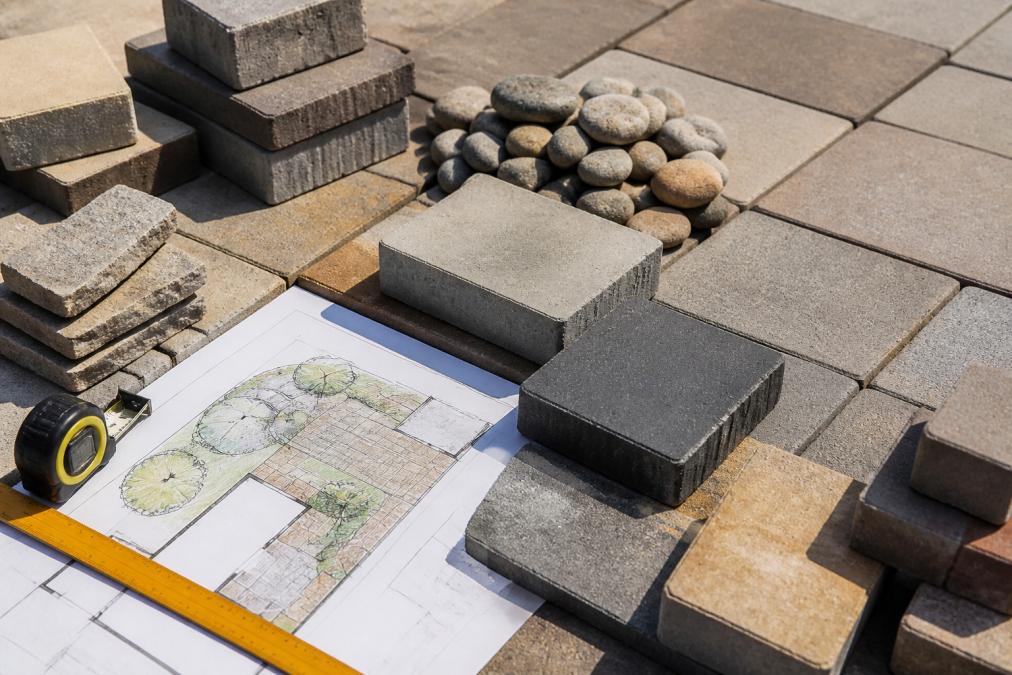
Matching Material to Foot Traffic Zone
| Zone | Traffic Level | Best Material | Why It Works |
|---|---|---|---|
| Main entry and walkways | Very high | Interlocking concrete pavers | Handles heavy loads, easy to repair |
| Parking and drive lanes | Very high | Concrete pavers on deep base | Resists vehicle weight and turning |
| Plazas and gathering areas | High | Large-format pavers | Fewer joints, cleaner look |
| Decorative borders | Low | Clay brick or stone | Visual accent, less wear |
| Seating and planters | Low | Segmental block walls | Built-in structure |
Interlocking concrete pavers win most high-traffic zones because a single damaged unit can be pulled and reset. When a poured concrete slab cracks, you replace the whole section.
Permeable Pavers: The Right Tool for Parking and Plazas
Permeable interlocking concrete pavers (PICPs) use wider joints filled with small aggregate instead of sand, so water drains through the surface into an open-graded base and, where soil allows, into the ground.
Where they earn their keep on a retail site:
- Parking stalls and overflow lots. Reduces standing water and cuts heat buildup.
- Plaza edges and drop-off zones. Handles sheet flow from adjacent impervious surfaces.
- Sites with stormwater limits. Many municipalities count permeable surface toward on-site retention requirements, which can reduce the size of a detention pond.
Concrete Finishes: Not All Flat Gray
If the design calls for poured concrete rather than pavers, the finish drives both look and slip resistance:
- Broom finish. Standard for walkways. Provides grip when wet and hides minor surface variation.
- Exposed aggregate. Aggregate is washed to the surface for texture and visual depth. Popular for plazas and entry aprons.
- Stamped concrete. Patterned to mimic pavers or stone. Lower upfront cost than real pavers, but cracks are harder to repair and color can fade unevenly in high-UV climates.
- Saw-cut joints. Control joints cut at regular intervals to direct cracking; spacing matters.
Stone Durability: What Holds Up Where
Natural stone is common in retail hardscape for accents and feature areas. Durability varies widely:
- Granite. Highest abrasion resistance. Good for high-traffic entries and steps, but the highest cost.
- Bluestone. Good for walkways and patios in cooler markets.
- Travertine. Attractive and cool underfoot, but softer. Better for shaded seating areas than main entries.
- Slate. Strong and slip-resistant when honed or natural-cleft, but can delaminate over an unstable base.
Climate-Resilient Hardscaping for Hot, Wet, Hurricane-Prone Sites
Heat, heavy rain, and storm season shape every material decision here. Three things matter most:
- Water absorption. Dense pavers resist saturation better than porous ones.
- Joint sand. Polymeric sand locks joints and limits washout during heavy rain.
- Wind load. Retaining walls and tall planters need proper reinforcement for storm conditions.
Specify material by zone, not by catalog. The entry, the drive lane, the plaza, and the border each have a different job. A single material across all four is either overbuilt in some places or underbuilt in others, and the underbuilt spots are where failures start.
Commercial Drainage Design Best Practices That Prevent Sinking Pavers
Commercial drainage design best practices start with one rule: water must leave the paved area, not sit under it. Every plan needs a defined runoff path before a single paver is laid.
Slope, Base Depth, and Where Water Actually Goes
A surface needs a slight slope so water runs off rather than soaking in. Too flat and it pools; too steep and it erodes joints and soil.
Ask any installer to show you the drainage plan before work starts. If they cannot explain where water goes on a heavy rain day, they have not planned for it. This one question filters out most of the shortcuts.
ADA Compliance for Retail Walkways: What Your Hardscape Must Deliver
ADA compliance for retail walkways is a legal requirement, not a design preference. The Americans with Disabilities Act sets standards for accessible routes, and your hardscape has to meet them. The U.S. Access Board ADA accessibility guidelines spell out the surface, slope, and width requirements that apply.
The core requirements for a retail walkway include:
- A firm, stable, and slip-resistant surface
- A minimum clear width for wheelchairs and walkers
- A running slope and cross slope that stay within limits
- Detectable warnings at curb ramps and crossings
- No abrupt level changes that create trip hazards
Universal Design Choices That Also Improve Pedestrian Flow
Accessible design helps everyone. Wider paths move crowds faster, gentle slopes are easier for strollers, carts, and delivery dollies, and clear wayfinding cuts confusion at entrances. When a walkway is wide, level, and obvious, shoppers move through it without thinking; when it is narrow or uneven, they slow down and bunch up.
The Benefits of a Lifetime Workmanship Guarantee on Commercial Projects
The benefits of a lifetime workmanship guarantee come down to accountability. It covers how the surface was built, not just the materials. Manufacturers warranty the pavers themselves, but not the prep, slope, or compaction, the parts that fail most often, and the parts a workmanship guarantee protects.
Hardscape ROI: How Better Site Planning Lifts Property Value
Property value responds to the parts of a site people actually see. A clean, level, well-drained entry signals a well-run property. That perception supports higher rents and stronger tenant interest.
The Mechanisms Behind the Return
Hardscape does not lift value by magic. It works through four measurable channels:
- Dwell time. A comfortable plaza with shade, seating, and level walking surfaces keeps shoppers on site longer, and longer visits correlate with higher spend per trip.
- Tenant demand. National tenants have site standards. A center with cracked walkways, standing water, and non-compliant ramps is harder to lease and commands lower rent per square foot.
- Maintenance cost. A surface built on a proper base needs less repair, and permeable paving can reduce stormwater handling costs.
- Liability exposure. Level, well-drained, ADA-compliant walkways reduce slip-and-fall risk, an insurance and legal cost line on the operating statement.
Which Hardscape Investments Pay Back Fastest
Not every upgrade returns the same. In practice, the highest-return moves on a retail site tend to be:
- Entry and primary walkway replacement. This is the surface every customer touches, and the one most likely to be compared against competing centers.
- Drainage correction. Fixing a chronic puddle at the entrance is often cheaper than the recurring liability and repair cost of leaving it.
- ADA compliance upgrades. Beyond legal necessity, accessible routes widen the customer base and reduce complaint risk.
- Permeable parking conversion. Where stormwater fees or retention requirements apply, this can offset cost through reduced infrastructure.
The Honest Limits
Hardscape is one input among many. It will not rescue a weak location, poor tenant mix, or a center with no anchor draw.
When budgeting hardscape improvements, rank projects by customer contact frequency, not by visibility from the road. The surface a shopper walks on every visit returns more than the surface they only see from a car.
Frequently Asked Questions
What are the key components of commercial hardscape design for retail?
Commercial hardscape design for retail covers every built surface shoppers touch: walkways, plazas, entry aprons, outdoor seating pads, retaining walls, curbs, and site drainage. The components that decide whether it holds up are the compacted base, the drainage slope, edge restraint, and joint material. Materials matter too, but base preparation and water management drive long-term performance far more than the paver color or finish.
What materials hold up best on high-traffic retail walkways?
For main pedestrian routes, interlocking concrete pavers set on a properly compacted aggregate base handle heavy foot traffic and cart loads well, and individual units can be lifted and replaced if one shifts or stains. Permeable paving suits parking stalls, overflow areas, and any zone where site drainage is tight. Decorative options like clay brick or travertine work better in lower-traffic accent areas and outdoor seating than on primary walkways.
How does drainage planning affect long-term hardscape performance?
Water is what destroys hardscapes. Poor grading, a shallow base, or missing outlets let water sit under the pavers, which causes settling, shifting, and cracked edges within a season or two. Commercial drainage design best practices start with a site survey, then set slope away from buildings, size the base to the soil and load, and route runoff to inlets or permeable zones. Get that right and the surface stays flat for years.
What does a lifetime workmanship guarantee actually cover on a commercial project?
A workmanship guarantee covers how the hardscape was built, not the pavers themselves. That typically means base preparation, compaction, grading, edge restraint, and installation methods. If settling, shifting, or joint failure shows up later and traces back to the installation, the contractor repairs it. Material defects fall under the paver manufacturer’s warranty instead. Ask any contractor to put the scope in writing before work starts.