Table of Contents
- Why Florida Driveways Need Different Pavers
- Best Paver Materials for Florida Driveways
- Concrete vs. Pavers: Which Holds Up Better in Florida?
- Permeable Paver Driveway Benefits for Heavy Rain
- How to Add Lighting to Paver Driveways
- Paver Driveway Maintenance Tips for Florida Homeowners
- Sub-Base and Permitting: What Most Guides Skip
- Choosing the Right Paver for Your Florida Driveway
- Frequently Asked Questions
Last Updated: September 21, 2026
Why Florida Driveways Need Different Pavers
Choosing the best pavers for Florida driveways starts with one fact: the material must survive heat, humidity, salt air, and shifting sandy soil. This guide from Venice Pavers breaks down what holds up and what fails within a few seasons.
In coastal Florida, a mid-grade paver on a properly engineered base will outlast a premium paver on a rushed one. Base preparation is the single biggest factor in how long a driveway lasts.
Heat, Humidity, and Salt Air
Florida’s climate punishes driveway surfaces three ways at once: summer surface temperatures climb well above air temperature, humidity keeps joints moist year-round, and salt air near the coast adds wear, especially on metal edging and soft-surfaced pavers.
Sandy Soil and Drainage Challenges
Sandy soil drains quickly, which sounds like an advantage until you realize it shifts easily under weight. Without proper compaction and a graded base, sand migrates, voids form, and pavers settle unevenly.
Best Paver Materials for Florida Driveways
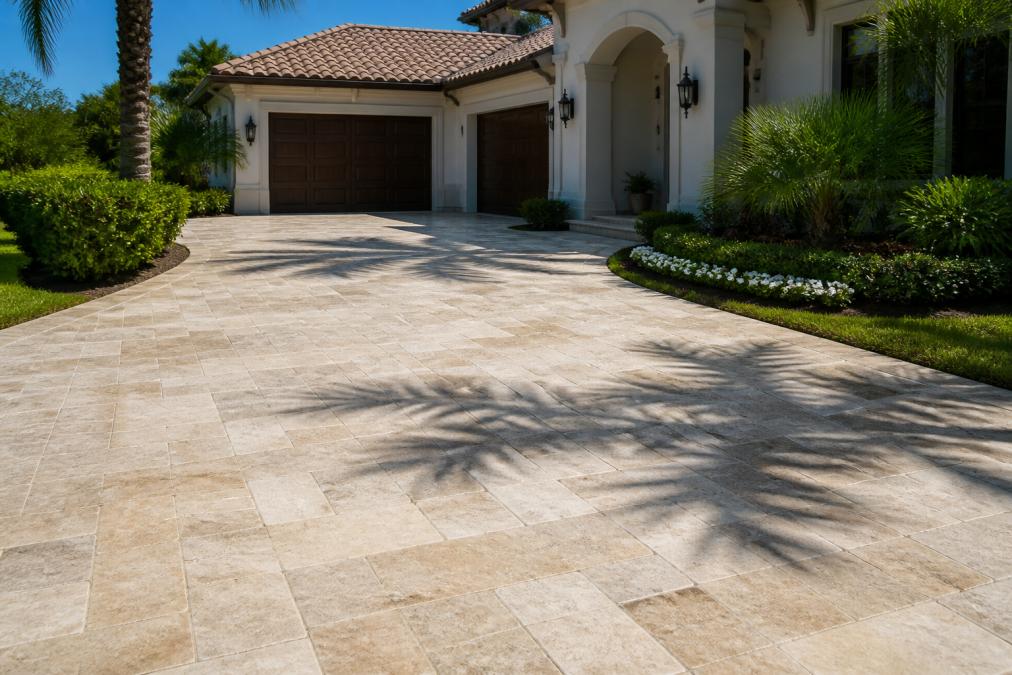
The three materials that perform best in this climate are concrete pavers, travertine and other natural stone, and clay brick. Each balances cost, durability, and appearance differently.
Concrete Pavers
Concrete pavers are the workhorse choice for most driveways here: consistent sizes, many colors and textures, and good UV performance when pigment is mixed through the material rather than surface-applied.
Travertine and Natural Stone
Travertine and other natural stone pavers offer the most distinctive look and stay cooler underfoot than darker materials, travertine’s light tones reflect heat, which matters on a west-facing driveway.
Clay Brick Pavers
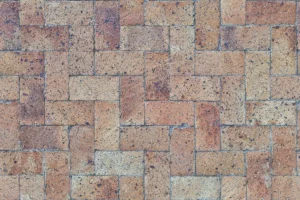
Clay brick pavers bring a classic look and excellent color retention because color runs through the full thickness of each unit, resisting fading and holding up to heavy traffic.
| Material | Heat and UV Performance | Maintenance Level | Best For |
|---|---|---|---|
| Concrete pavers | Good, with through-mixed pigment | Low to moderate | Most driveways, high traffic |
| Travertine and natural stone | Excellent, stays cooler | Moderate, seal periodically | Curb appeal, coastal homes |
| Clay brick | Excellent color retention | Low to moderate | Classic looks, heavy use |
Concrete vs. Pavers: Which Holds Up Better in Florida?
Pavers hold up better than a poured concrete slab in Florida because they flex with ground movement instead of cracking. A slab is rigid, when sandy soil shifts, it has nowhere to go, so it cracks.
The most common mistake with driveway pavers is skipping proper base compaction to save time. The surface looks perfect for a season, then ruts and settles within two to three years, and fixing it means pulling up the entire driveway.
Permeable Paver Driveway Benefits for Heavy Rain
Permeable paver driveway benefits show up fastest during the rainy season. These systems use wider joints and an open-graded base that lets water drain through the surface instead of running off it.
How to Add Lighting to Paver Driveways
Adding lighting to a paver driveway comes down to timing: most options are easiest to install during the build, before the pavers go down. Run wiring and set fixtures while the base is exposed to avoid cutting into a finished surface later.
The common approaches:
- Low-voltage path lights along the driveway edge for safety and definition
- In-grade well lights set flush into the paver field to wash light upward
- Hardscape wall lights on retaining walls or pillars flanking the entrance
- Step and edge lighting where the driveway meets a walkway or entry
Paver Driveway Maintenance Tips for Florida Homeowners
Paver driveway maintenance in this climate is less about cleaning and more about denying mold, algae, and weeds the damp, shaded conditions they need. Humidity keeps joints moist for months, and that moisture causes most surface problems homeowners blame on the pavers. Regularly clearing away organic buildup prevents these issues from taking root, and incorporating professional driveway maintenance tips ensures your surface remains resilient against the relentless Florida moisture.
Start with a simple seasonal rhythm:
- Rinse quarterly to wash away salt residue, pollen, and the organic film that feeds algae. A garden hose is usually enough; a pressure washer should stay under 1,500 PSI and be kept off the joints to avoid blasting out sand.
- Refill joint sand every year or two, or whenever you can see gaps deeper than a quarter inch. Missing sand is the single biggest invitation for weeds and for pavers to shift under tire load.
- Reseal every two to three years, and more often on coastal properties where salt air breaks down sealers faster. Resealing locks in joint sand and slows moisture absorption.
- Pull weeds by hand while they are small. Roots that establish in a joint widen it, and pulling a mature weed often takes sand with it.
Mold and Algae Prevention in Florida Humidity
Mold and algae are the maintenance issue most guides skip, and the one homeowners here actually notice. The green-black film creeping across shaded pavers is usually algae, not dirt, thriving where joints stay damp, sprinklers hit the driveway, and trees block morning sun.
The fix is environmental, not just chemical:
- Fix the water source first. Redirect sprinkler heads so they are not overspraying the driveway, and correct any low spot where water ponds after storms. Algae will keep returning as long as the surface stays wet.
- Keep joints full. Algae colonizes the sand in open joints. Topping off joint sand removes its foothold.
- Clean with the right product. A diluted oxygen bleach or a paver-safe algaecide works better than chlorine bleach, which can dull color and harm nearby landscaping. Apply, let it dwell, scrub with a stiff brush, and rinse.
- Improve airflow and light where you can. Trimming low branches that keep a driveway in shade all day makes a measurable difference in how fast algae returns.
Treat mold and algae as a drainage symptom, not a cleaning problem. If the same section regrows film within a few months, water is sitting where it should not.
Weed Prevention Between Pavers
Weeds germinate in the joint sand, so the goal is to keep that sand dense and the surface draining. Beyond refilling joints, polymeric joint sand suits driveways that see heavy rain because it sets up and resists washout better than plain sand, not permanent, but it reduces how often you refill.
What to Check After Every Storm
After a heavy summer storm, walk the driveway and check three things: edge restraint for movement, joints for washed-out sand, and any low corner for standing water. Catching a shifted edge or washed joint early is a small repair; ignoring it for a season means a settled section that must be pulled up and rebuilt.
Sub-Base and Permitting: What Most Guides Skip
Most paver guides stop at material selection. The two things that actually decide whether a driveway performs for decades, sub-base engineering and permitting, rarely get more than a sentence. Both matter more than the paver you pick, and both are where most failed driveways went wrong.
Sub-Base Engineering for Sandy Soil
The sub-base is the compacted crushed stone beneath the bedding sand and pavers. On sandy soil it does the heavy lifting: sand alone has no interlock and migrates under vibration, so the base must be built in lifts, typically 4 to 6 inches of compacted stone at a time, with each lift compacted before the next.
- Excavate to the right depth. The finished paver surface needs to sit at a height that keeps water flowing away from the house and garage. That means calculating base depth, bedding sand, and paver thickness together before digging.
- Use the right stone. A well-graded crushed stone base compacts into a dense, interlocking matrix. Open-graded stone is for permeable systems, not standard driveways.
- Compact in lifts, not all at once. Dumping the full base depth and compacting the top few inches leaves soft spots underneath that show up as ruts months later.
- Confirm slope before pavers go down. Water should shed away from structures and toward a defined runoff path. Fixing grade after installation means pulling up the driveway.
- Edge restraint matters. Without proper edge restraint, the outer pavers spread under load and the whole surface loosens.
Permits and HOA Rules
Permits and HOA rules catch homeowners off guard more often than material choices. Many communities require approval before changing a driveway’s footprint, material, or drainage pattern, and some HOAs restrict colors, patterns, or impervious surface, limits that are increasingly common as municipalities manage stormwater runoff.
Before work begins, check three things:
- Local building department requirements. Some jurisdictions require a permit for driveway replacement, especially if the footprint, grade, or drainage changes. Others require a right-of-way or driveway apron permit if the work touches the connection to the street.
- HOA architectural review. Most HOAs have a design review process. Submit material samples, color, pattern, and a site plan showing drainage before you order pavers, not after.
- Stormwater and impervious surface rules. If your lot is already near its impervious surface limit, a permeable paver system may be the only compliant option. Knowing this before you choose a material saves a redesign.
Choosing the Right Paver for Your Florida Driveway
The right paver for a Florida driveway is matched to your soil, drainage, traffic, and budget, installed on a base built to handle all four. Material gets the attention, but the base and drainage plan decide performance.
Here is a simple way to decide:
- Coastal property with salt exposure: travertine or sealed concrete pavers, with coastal-rated sealer
- High-traffic driveway: concrete pavers or clay brick on a heavily compacted base
- Flood-prone or low-lying lot: permeable pavers with an open-graded base
- Tight budget, standard lot: concrete pavers with through-mixed pigment
- Tricky grading: get a professional assessment before choosing any material
Frequently Asked Questions
What type of pavers are best for driveways in Florida?
Concrete pavers and travertine are the top choices for Florida driveways. Concrete pavers resist UV fading, handle heavy loads, and cost less than natural stone. Travertine stays cooler underfoot and offers a high-end look. Clay brick also performs well but costs more. The best pick depends on your budget, traffic, and how much heat you want to avoid. Permeable options work well where drainage is a concern.
Are permeable pavers a good choice for heavy rainfall areas?
Yes. Permeable paver driveway benefits include reduced runoff, fewer puddles, and less strain on storm drains. They let water pass through gaps and into a gravel base, which matters in areas with sandy soil and frequent downpours. They cost more upfront than standard pavers, but they can reduce drainage problems and may satisfy local stormwater rules. Ask your installer whether your soil and slope suit them.
How much does a paver driveway cost in Florida?
Pricing depends on the paver material, driveway size, base preparation, and site access. The choice of material, whether concrete, travertine, or clay brick, along with the complexity of the base and drainage work, will influence the total investment. Venice Pavers provides free estimates based on your specific project, ensuring you receive a precise quote tailored to your needs.
How do I maintain pavers in Florida’s humidity?
Paver driveway maintenance tips for Florida include sweeping regularly, rinsing away salt and sand, and refilling joint sand every year or two. Sealers help block moisture and reduce weed growth, but avoid sealing too soon after installation. Check for efflorescence (white mineral deposits) and clean it with a paver-safe cleaner. In shady areas, treat mold or mildew promptly. A well-built base prevents most shifting and settling.
A driveway is one of the few home improvements you look at every single day, and one of the few where the wrong base turns a premium material into a repair bill. If you want a paver driveway that still sits flat after a decade of summer storms, start with a team that treats the base as the main event. Venice Pavers offers a free consultation and estimate, handles the drainage and grading assessment up front, and backs its work with a lifetime workmanship guarantee.