Table of Contents
- What Standing Water Is and How It Differs From Normal Puddles
- Standing Water in Yard Causes: The Most Common Culprits
- Signs of Poor Yard Drainage You Can Spot Yourself
- Step-by-Step Inspection Checklist for Locating Standing Water
- Water Pooling in Backyard After Rain: Distinguishing Root Causes
- Health and Safety Concerns With Standing Water
- When to Call a Professional for Standing Water Issues
- Frequently Asked Questions
Last Updated: October 10, 2026
What Standing Water Is and How It Differs From Normal Puddles
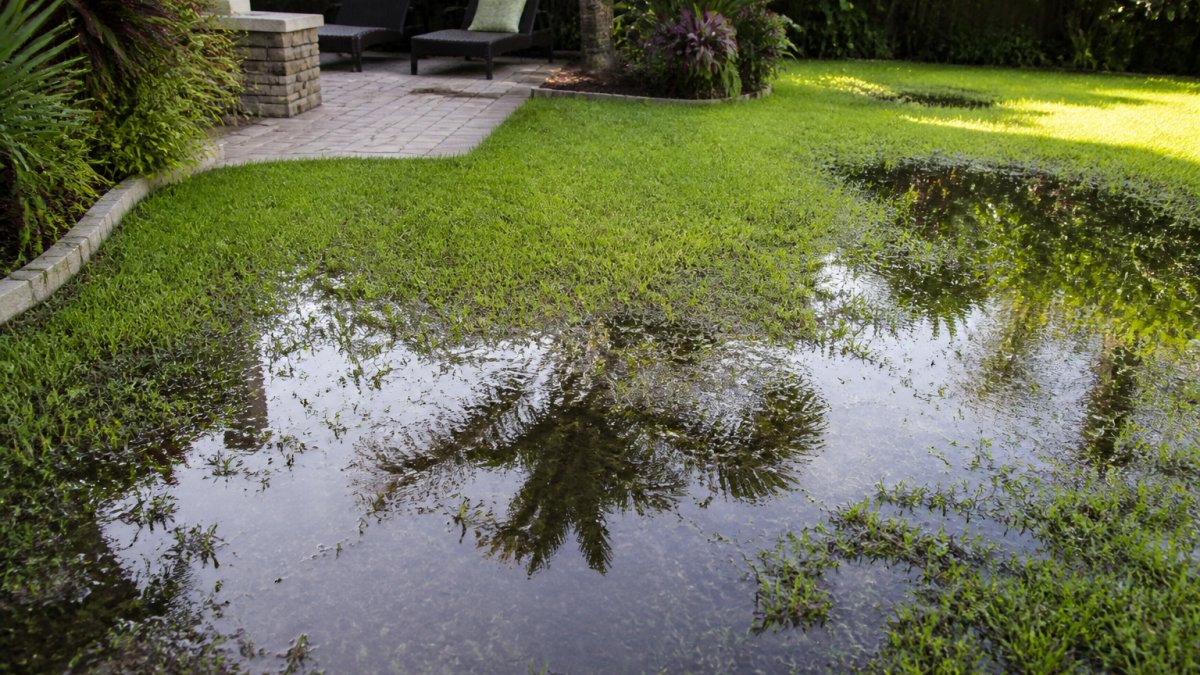
Standing water is water that pools and remains in one spot for hours or days after rain. It doesn’t drain away like a normal puddle. The key difference is duration and depth.
At Venice Pavers, we’ve identified standing water as one of the biggest threats to outdoor hardscapes and landscape health. When water pools instead of draining, it creates problems that go far beyond an ugly wet patch including yard flooding Venice.
Standing water typically collects in low areas of your yard. It may look like a small lake after heavy rain, or it might be a soggy, waterlogged zone that stays damp for days.
Standing Water in Yard Causes: The Most Common Culprits
Understanding why standing water forms in your backyard is the first step to fixing it. Most cases trace back to one or more of these root causes. Identifying which one affects your property helps you choose the right solution.
Low Spots and Natural Depressions
Low areas are the most obvious cause of standing water in yards. These natural depressions act like bowls. Water flows downhill and collects in them. Some low spots were there from the start when your home was built. Others develop over time as soil settles or compacts.
You can often spot these by looking at your yard after rain. Water will pool in the same place every time. These areas may also stay wet longer than the rest of your lawn. Grass in these zones often looks yellowed or stressed because roots sit in waterlogged soil.
Poor Yard Grading and Slope Issues
Yard grading refers to the slope and contour of your land. Proper grading directs water away from structures and toward drainage areas. Poor grading does the opposite, it channels water toward low spots or toward your home’s foundation.
Many yards lack adequate slope. The ground may be nearly flat or even slope the wrong direction. This prevents water from flowing away naturally. After rain, water just sits there. Professional grading creates a gentle slope that encourages runoff to move where you want it to go.
Compacted or Slow-Draining Soil
Soil type matters enormously. Clay soil drains slowly. Sandy soil drains fast. Most yards have a mix. When soil becomes compacted from foot traffic, equipment, or construction, water can’t penetrate it. The water sits on top instead of soaking in.
Compacted soil is common around high-traffic areas. Pathways, driveways, and play zones often have hard-packed earth underneath. This prevents infiltration. Water that can’t soak in has nowhere to go but sideways, right into your low spots.
Blocked Gutters and Downspouts
Clogged gutters and downspouts redirect water in unwanted directions. When gutters overflow or downspouts dump water at ground level near your home, that water has to go somewhere. Often it pools in your yard or flows toward your foundation.
Check your gutters regularly. Leaves, debris, and dirt accumulate fast. Downspouts should extend at least 4-6 feet away from your home’s foundation. If they’re clogged or too short, water concentrates in nearby areas and creates pooling problems.
Drainage Problems and Runoff From Nearby Areas
Sometimes water pools in your yard because it’s running in from somewhere else. Neighboring properties, slopes above your home, or poor drainage from streets can all send water your way. This runoff collects in low spots on your property.
You might notice water flowing across your yard during heavy rain. It comes from uphill and settles in the lowest point. This is a trickier problem because the source isn’t on your property. But solutions exist, including swales, berms, and redirected drainage.
Signs of Poor Yard Drainage You Can Spot Yourself
Before you measure or document anything, learning how to identify standing water in your backyard starts with looking for visual clues that drainage is failing. These signs often appear before standing water becomes obvious. Persistent damp patches or mossy growth indicate that the soil is struggling to absorb moisture, which necessitates a proactive approach to fix backyard drainage before the underlying issues compromise your landscape.
Visual Indicators Around Your Property
Walk your yard after rain. Look for areas where water pools or the ground stays wet longer than it should. These are your problem zones. Mark them mentally or with stakes.
Check for erosion patterns. Water that flows the same direction repeatedly carves channels in soil. You might see bare patches where grass has washed away. Mud splatter on siding also indicates water is running off in that direction.
Look at the ground surface. Is it crusty or hard-packed? Does water bead up on top instead of soaking in? This signals compacted soil that won’t drain. Compare this to other areas where water disappears quickly.
Plant and Grass Health Signals
Grass and plants tell you a lot about drainage. Yellowing or browning grass in specific areas often means waterlogging. Roots can’t breathe in saturated soil. The grass weakens and dies.
Moss growth is another sign. Moss thrives in wet, shady spots where grass struggles. If you see moss patches, standing water or poor drainage is likely present. Some areas may show algae or slime on the soil surface, another indicator of constant moisture.
Dead plants or shrubs in certain zones suggest they’re sitting in water too long. Healthy plants need drainage. If you’ve lost vegetation in the same spots repeatedly, drainage is the culprit.
Step-by-Step Inspection Checklist for Locating Standing Water
Now let’s walk through how to identify standing water in your backyard with a systematic approach to find and document it on your property. This process takes 30-60 minutes and gives you a clear picture of where problems exist.
Before and After Rain: What to Look For
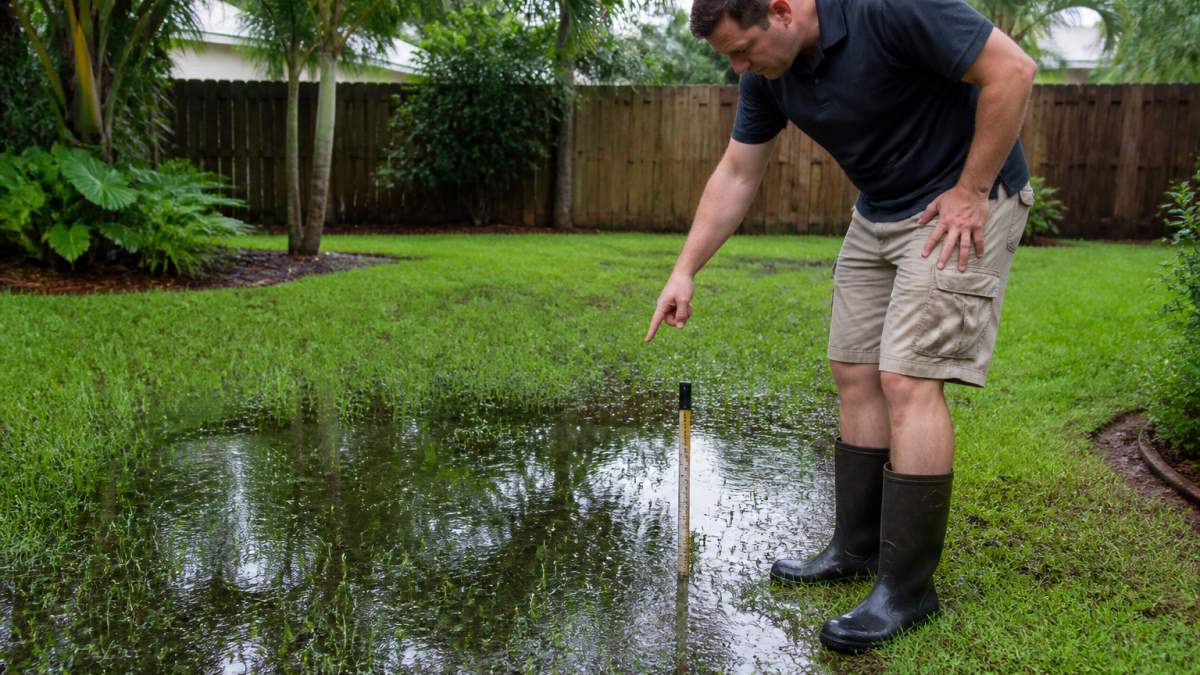
The best time to inspect is right after heavy rain. Water is actively pooling, and you can see exactly where it collects. Walk your entire yard slowly. Note every spot where water sits.
Use a simple marking system. Place stakes or flags at the edges of each pool. This helps you visualize the size and shape. Take photos from multiple angles. These photos become your reference for later.
Check the same areas 24 hours after rain. Note how long water persists. If it’s still there after a full day, you have a serious drainage problem. If it drains within a few hours, the issue is less severe.
Measuring and Documenting Problem Areas
Measure the depth of standing water. Use a stick or ruler. Even shallow pooling (1-2 inches) matters because it means water isn’t draining at all. Deeper pools (3+ inches) indicate a more serious issue.
Free consultation & estimate →
Measure the area’s dimensions. How wide and long is each pool? Document this with photos and notes. Create a simple map of your yard showing where pools form. Mark high spots and low spots.
Record rainfall amounts if possible. Check local weather data for the rain event. Heavy downpours create temporary pooling, but light rain should drain away quickly. If light rain causes pooling, drainage is definitely compromised.
Water Pooling in Backyard After Rain: Distinguishing Root Causes
Once you’ve located standing water, the next step is figuring out why it’s there. Different causes require different solutions. Understanding the root cause saves time and money.
Surface Runoff vs. High Water Table vs. Leaking Pipes
Surface runoff is water flowing across the ground from rain or from uphill areas. It pools in low spots because it can’t drain down into soil.
A high water table means groundwater is close to the surface. Your yard stays wet because the water table is high, not because of poor surface drainage.
Leaking pipes underground create wet spots that have nothing to do with rain. You might notice pooling even on dry days. The water feels clean, not muddy. This requires professional plumbing diagnosis.
To distinguish between them: Does the pooling happen only during or right after rain? That’s surface runoff. Does it persist for weeks even without rain?
Seasonal and Weather-Related Patterns
Track your standing water over time. Does it appear only in certain seasons? Winter and spring often bring more pooling due to higher rainfall and cooler temperatures (slower evaporation). Summer might show less pooling despite rain.
Heavy rain events create temporary pooling everywhere. Light rain should drain away quickly in a healthy yard. If light rain causes pooling, that’s a sign of poor drainage, not a normal response.
Document patterns across several months. This helps you understand whether the problem is temporary or chronic. A professional can use this information to recommend the right fix.
Health and Safety Concerns With Standing Water
Standing water isn’t just an eyesore. It creates real health and safety risks for your family and property.
Pooled water becomes a breeding ground for mosquitoes. Mosquitoes lay eggs in standing water (the CDC). Within days, you have larvae. Within weeks, you have adult mosquitoes.
Waterlogged soil weakens the ground beneath hardscapes and structures. Pavers shift. Driveways crack. Foundations settle unevenly. Over time, these problems become expensive to repair.
Standing water also promotes mold and mildew growth on nearby surfaces. Wet conditions create the perfect environment for fungal growth.
Children and pets may play in pooled water, exposing them to bacteria and parasites. Contaminated water poses health risks. Keeping water moving prevents these hazards.
When to Call a Professional for Standing Water Issues
Some standing water problems you can manage yourself. Others require professional expertise. Knowing the difference saves frustration and money.
Call a professional if standing water persists after heavy rain and doesn’t drain within 24 hours.
If you suspect a high water table or leaking underground pipes, professional diagnosis is essential.
If standing water threatens your home’s foundation or basement, get professional help immediately. Foundation damage is expensive.
Venice Pavers brings over 30 years of experience in hardscape design and drainage planning.
For complex drainage issues or if you’re planning a major outdoor project, professional assessment ensures solutions work long-term.
Standing water in your backyard signals a drainage problem that won’t fix itself.
Frequently Asked Questions
How can I tell whether a wet spot is standing water or just soggy soil?
Standing water sits visibly on the surface and persists for hours or days after rain, while soggy soil feels damp but drains gradually. Use a simple test: poke a stick or probe into the wet area. If water pools around it or rises to the surface, you have standing water. If the area feels squishy but no water rises, it’s likely saturated soil with poor infiltration. Standing water may also attract mosquitoes or develop a film on the surface, whereas soggy soil typically does not.
What are the most common standing water in yard causes?
The primary causes include low spots where water naturally collects, poor yard grading that slopes toward structures instead of away, compacted clay soil that prevents water infiltration, blocked gutters and downspouts that redirect runoff into your yard, and drainage problems from neighboring properties. A combination of factors often contributes to the issue. Identifying which cause applies to your property helps determine the right solution, whether that’s grading adjustments, soil improvement, or drainage system installation.
How long should water persist in my yard after rain?
After a typical rainfall, water should drain from your lawn within a few hours. If puddles remain for more than 24 hours, you likely have a drainage problem. In areas with clay-heavy soil or high water tables, drainage may be slower, but standing water that persists for days signals poor drainage. Document how long puddles stay after different rainfall amounts to establish a pattern. This information helps professionals diagnose whether the issue is surface drainage, soil infiltration, or a deeper water table problem.
When should I call a drainage professional about standing water?
Contact a professional if water persists for more than 24 hours after rain, if you notice damage to your foundation, pavers, or landscaping, or if you cannot identify the cause yourself. A professional can assess whether the issue requires simple grading fixes, soil remediation, or more complex solutions like French drains or daylight outlets. They can also distinguish between surface runoff and high water table problems that may need different approaches. Given that standing water can damage hardscape installations and property value, early professional assessment often saves money.