Table of Contents
- What Drives the Cost of Paver Driveway Installation
- Pavers vs Concrete for Driveways: Which Is Worth the Investment?
- Driveway Base Preparation Requirements That Affect Your Quote
- Material and Labor Costs: Where Your Money Goes
- Hidden Costs: Demolition, Disposal, and Permeable Pavers
- Paver Driveway Maintenance Tips to Protect Your Investment
- DIY vs Professional Installation: What You Actually Save
- Frequently Asked Questions
Last Updated: September 27, 2026
What Drives the Cost of Paver Driveway Installation
The cost of paver driveway installation is driven by square footage, site conditions, and base preparation. At Venice Pavers, we’ve spent more than 30 years installing hardscape across Southwest Florida, and the quotes that surprise homeowners are rarely about the pavers. They’re about what’s underneath them.
Square Footage and Layout
Square footage is the biggest multiplier in any estimate. A two-car driveway typically runs wider and longer than most homeowners picture, and every additional square foot adds material, labor, and base depth.
Site Conditions and Excavation
Site conditions decide how much excavation your project needs, and excavation is where budgets quietly grow. Grading problems, root systems, and old surfaces must be removed before base work begins.
- Flat, clear, stable lots: straightforward excavation, predictable base depth
- Sloped or poorly graded lots: regrading, possible retaining elements, more hauling
- Lots with existing concrete or old pavers: demolition and disposal added to the scope
- Sandy or loose subgrade: deeper excavation and additional compaction passes
Pavers vs Concrete for Driveways: Which Is Worth the Investment?
Pavers win on longevity and repairability; concrete wins on upfront simplicity.
|
Factor |
Interlocking Pavers |
Poured Concrete |
|---|---|---|
|
Upfront cost |
Higher |
Lower |
|
Repair method |
Replace individual units |
Patch or replace slab |
|
Cracking risk |
Low (flexible system) |
Higher in clay soils |
|
Curb appeal |
High, wide pattern choice |
Limited |
|
Lifespan with maintenance |
Long-term durability |
Moderate |
|
Surface temperature |
Cooler underfoot |
Hotter in direct sun |
Driveway Base Preparation Requirements That Affect Your Quote
Driveway base preparation requirements are the most underquoted part of any paver project. Excavation depth, aggregate base thickness, and compaction all scale with traffic load and soil conditions, the reason two quotes for the same square footage can differ sharply.
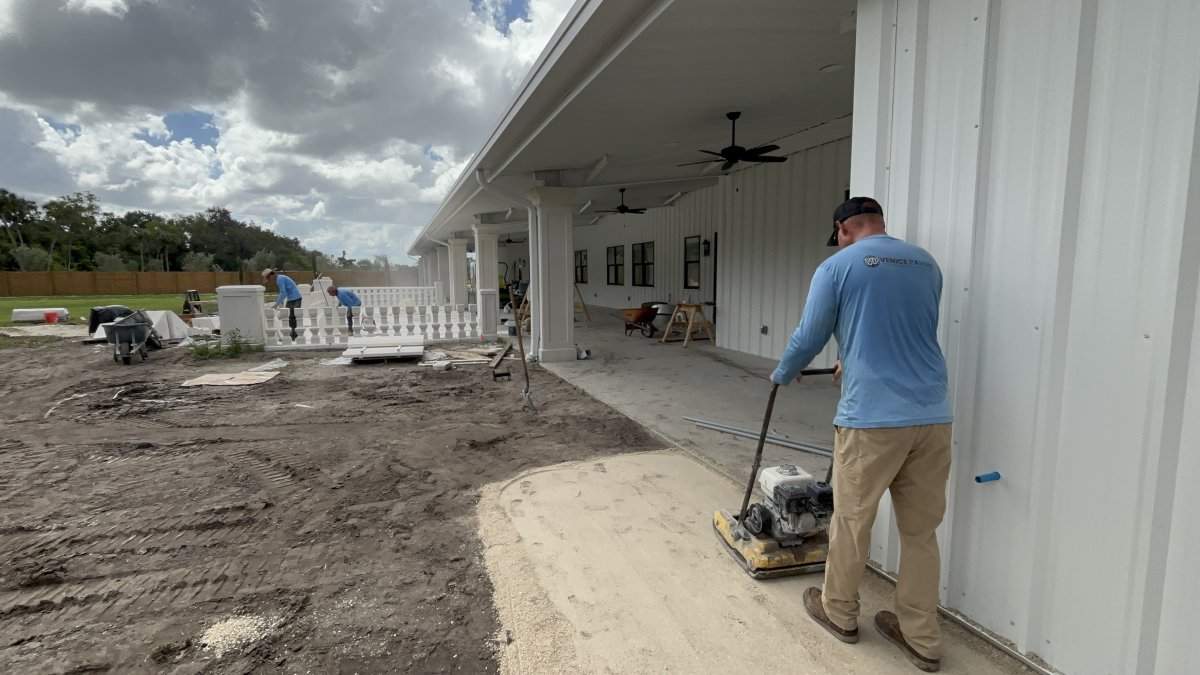
Construction crew compacting a gravel base for a paver driveway using a plate compactor on a sunny day.
Compaction, Aggregate Base, and Drainage
Compaction separates a driveway that lasts from one that ripples. Aggregate base is placed in lifts and compacted in layers, not dumped and smoothed once.
Material and Labor Costs: Where Your Money Goes
Material and labor split your estimate roughly down the middle, with labor often taking the larger share. That surprises people who assume they’re mostly buying stone, but a paver driveway is mostly a construction project with a decorative surface on top.
Here’s what actually sits inside each line.
Material costs
- Pavers themselves. The visible cost homeowners fixate on. Thickness matters: units rated for vehicular traffic are thicker than patio pavers, and the wrong grade cracks under tire load.
- Aggregate base. Sold by the ton and delivered by the truckload. Base thickness scales with traffic load and soil, so this line moves more than people expect.
- Joint sand. Stabilizing sand that locks units together. Cheap per bag, but it adds up across a full driveway and needs replenishing.
- Edge restraints. Aluminum or plastic edging plus spikes. Inexpensive relative to the total, but skipping or under-specifying it is a common failure point.
- Drainage components. Channel drains, catch basins, or open-graded base where the site requires them.
Labor costs
- Excavation and hauling. Removing existing surface and subgrade material, then trucking it off-site.
- Grading and shaping. Establishing slope so water leaves the surface and moves away from the structure.
- Base installation and compaction. Placing aggregate in lifts and compacting each layer, the slowest, least visible, most important labor line.
- Cutting and laying. Field cuts at borders, curves, and obstructions; setting units in the chosen pattern.
- Finishing. Sand sweeping, vibration, edge restraint installation, and cleanup.
Why Two Quotes for the Same Square Footage Differ
When two bids for the same driveway come back far apart, the gap is almost never the pavers, it’s the base. One contractor may plan a thinner aggregate layer with fewer compaction passes; another may specify a deeper, engineered base with proper drainage. Both look identical the day the job is done, but not after three rainy seasons. Long-term structural integrity relies on this foundation, yet protecting the surface from moisture penetration through professional paver sealing services remains a critical step in preserving the driveway’s finished appearance.
What You Can and Can’t Control
You control pattern, paver color, and border design; you don’t control soil, water table, or how much excavation your lot needs. Spend your design budget on the parts you’ll see and let the contractor spend the base budget on the parts you won’t, cutting the base to afford a fancier pattern is the trade that fails.
Free consultation & estimate →
Hidden Costs: Demolition, Disposal, and Permeable Pavers
Hidden costs are where budgets break, and each one is knowable before the job starts, which is why a vague quote is a warning sign.
Demolition and Disposal
If there’s existing concrete, asphalt, or old pavers, someone has to break it up and haul it away, the most underquoted line in the industry.
- Breaking up the old surface. Concrete slabs are typically saw-cut at the edges and broken out with a breaker or excavator. Thicker and reinforced slabs take longer.
- Loading and hauling. Debris is loaded into dump trucks and driven to a transfer station or landfill.
- Disposal fees. Charged by weight or by load, and they vary by facility. Concrete and asphalt are heavy, a full driveway’s worth of slab is a lot of weight.
- Subgrade repair. Once the old surface is gone, the exposed subgrade often needs regrading or additional compaction before base work begins.
Permeable Pavers
Permeable systems cost more than standard pavers because they need open-graded aggregate, a different base profile, often a subsurface drainage layer, and pricier units.
Regional Climate and Base Depth
Base depth isn’t universal. It’s set by climate, soil, and traffic load, and national cost guides average those variables into a number that describes no specific lot.
DIY vs. Professional ROI
DIY saves the labor line and costs you the base. Excavation, grading, and compaction require equipment most homeowners don’t own, and a base done wrong means redoing the whole driveway. The savings evaporate the first time a section sinks.
Paver Driveway Maintenance Tips to Protect Your Investment
Paver driveway maintenance tips come down to three habits: joint sand, sealing, and drainage checks. Do these and a well-built driveway holds its appearance for decades.
- Replenish joint sand when it settles or washes out. Sand locks the units together and keeps water from undermining the base.
- Seal every few years, depending on traffic and sun exposure. Sealing slows color fade and helps sand stay put.
- Check drainage after heavy rain. Water should sheet off the surface, not pool in low spots.
- Address weeds and moss early. They signal sand loss, not a landscaping problem.
- Fix a settled section promptly. One low spot becomes three once water starts collecting.
DIY vs Professional Installation: What You Actually Save
DIY saves labor and costs you the parts of the job you can’t see.
Frequently Asked Questions
How much does a 20×20 paver driveway cost?
A 20×20 paver driveway covers 400 square feet. Pricing depends on the paver material, base preparation requirements, site access, and whether demolition is needed. Because every project has different site conditions, the only accurate way to get a number is a professional on-site estimate. Venice Pavers offers free consultations to assess your specific driveway and provide a detailed quote.
Is it cheaper to do a concrete or paver driveway?
Concrete typically has a lower upfront cost than pavers. However, pavers can last decades longer and individual units can be replaced if damaged, while concrete often cracks and requires full replacement. When you factor in long-term durability and maintenance costs, pavers can offer better value over the life of the driveway. A professional can help you compare both options for your specific property.
How long will a paver driveway last?
A properly installed paver driveway with correct base preparation can last 25 to 50 years or more. The key is the sub-base and compaction. When the base is installed correctly with proper drainage and edge restraints, pavers resist shifting and settling. Venice Pavers backs its workmanship with a lifetime guarantee, so if something shifts years down the road, the team will address it.
Does a paver driveway increase home value?
Paver driveways improve curb appeal, which is one of the first things buyers notice. A well-designed hardscape can set a property apart in a competitive market. While no single improvement guarantees a specific return, pavers are widely recognized as a premium upgrade that enhances the overall look and perceived value of a home.
What factors influence the total cost of paver installation?
The main factors are square footage, site conditions (grading, drainage, soil type), excavation depth, base material requirements, paver type and thickness, pattern complexity (herringbone and Versailles patterns take more labor), edge restraints, and whether demolition of an existing surface is needed. Permeable paver systems also require additional layers and cost more. Each of these variables changes the project estimate significantly.
Are there ongoing maintenance costs for paver driveways?
Yes, but they are minimal. You will need to re-sand joints periodically, especially after heavy rains, and sealing every few years helps protect the surface and color. Pressure washing removes dirt and stains. These maintenance costs are far lower than replacing a cracked concrete slab. Following a few paver driveway maintenance tips like prompt weed removal and joint sand replenishment will keep the surface stable for decades.