Quick Summary
The best pool deck pavers for Florida balance slip resistance, heat, durability, and cost, so start by assessing sun exposure, splash zones, and ground drainage. Concrete pavers are the most budget-friendly, natural stone feels cooler underfoot, and porcelain needs less upkeep if you choose a textured finish.
- Assess sun exposure, splash frequency, and ground conditions before choosing a material.
- Concrete pavers are often the most affordable option with a wide range of colors and shapes.
- Natural stone feels cooler underfoot but needs regular sealing and careful cleaning.
- Choose textured finishes such as tumbled or brushed, and avoid high-gloss surfaces where people walk wet.
- Test a wet sample in your own shoes and in the afternoon sun before committing.
Table of Contents
- Start With Your Pool Deck’s Conditions
- Compare the Best Pavers for Pool Deck Use
- Natural Stone vs Porcelain Pavers for Pool Areas
- Choosing Slip-Resistant Pool Pavers
- Heat, Color and Surface Temperature
- Pool Deck Paver Maintenance by Material
- Booking Your Pool Deck Paver Consultation
- Frequently Asked Questions
Start With Your Pool Deck’s Conditions
Choosing pool deck pavers for a Florida pool starts with the site, not the catalog. Heat, sun exposure, splash zones, and how much water your deck handles all shape which material will hold up. See pool deck paver work in Sarasota for a local reference point.
Look at three things before you choose a material. First, how much direct sun the deck gets, since that drives surface temperature. Second, how often water splashes, drips, or pools on the surface. Third, the condition of the ground underneath, because drainage and base preparation matter as much as the paver itself.
Planning is easiest when those three answers are written down. Browse existing paver pool deck projects to see how finished decks handle these conditions.
Compare the Best Pavers for Pool Deck Use
The best pavers for a pool deck balance slip resistance, comfort underfoot, heat, durability, and cost. You can browse paver pool deck products by category to compare options side by side.
Several materials are common on pool decks:
| Material | Strengths | Trade-offs |
|---|---|---|
| Concrete pavers | Affordable, wide color and shape range | Can run hot in full sun; texture quality varies |
| Natural stone (travertine, limestone) | Cool underfoot, classic look, naturally textured | Higher cost; requires sealing and care |
| Porcelain pavers | Low porosity, consistent look, resists staining | Smooth finishes can be slippery when wet |
| Manufactured stone | Stone look at a lower price point | Finish quality depends on the manufacturer |
Concrete pavers are often the most budget-friendly option that still offers good design range. Natural stone brings a cooler, more luxurious surface, though it asks more of you over time. Porcelain offers a consistent, low-maintenance look, but only certain finishes are suitable for wet areas.
A Weighted Decision Framework
Instead of comparing materials in the abstract, rank your priorities first, then match them to materials. A practical approach is to assign a weight to each factor based on how you actually use the deck:
- Safety and wet traction, weight this highest if children, older adults, or guests who walk barefoot use the pool.
- Heat and barefoot comfort, weight this highest if the deck gets full afternoon sun and is used barefoot.
- Installed and lifetime cost, weight this highest if you are working to a fixed budget or plan to stay in the home long-term.
- Appearance and design flexibility, weight this highest if the deck is a visible feature of the yard.
- Maintenance and sealing, weight this highest if you want minimal upkeep.
- Accessibility and transitions, weight this highest if anyone uses a wheelchair, walker, or mobility aid.
Once your weights are set, score each candidate material on a simple scale. The material with the best weighted score is your shortlist leader, not necessarily the one that looks best in a showroom.
Total Installed and Lifetime Cost
Purchase price per square foot is only part of the story. A realistic comparison includes:
- Material cost, the pavers themselves, plus waste from cuts and layout.
- Base preparation, excavation, base material, compaction, and drainage slope.
- Labor, installation complexity varies by paver size, pattern, and material hardness.
- Coping and edge details, coordinating the pool edge adds material and labor.
- Sealing, natural stone and some concrete pavers need periodic sealing.
- Repairs and replacement, sand-joint pavers allow individual units to be lifted and reset; large-format porcelain and stone may require more careful handling.
A common pattern is that a lower purchase price can be offset by higher sealing or repair costs over time, while a higher upfront material may reduce long-term maintenance. Ask each installer for a line-item breakdown so you can compare total installed cost, not just the paver price.
Climate and Site Fit
Climate affects both material choice and installation. In hot, sunny climates, light-colored, textured surfaces stay cooler underfoot. In coastal areas, salt exposure and humidity make sealing and rinsing routines more important. Where the ground stays wet, drainage slope and joint design matter as much as the paver itself. Confirm with your installer how the material performs in your specific sun, salt, and moisture conditions rather than relying on general claims.
Accessibility and Comfort
Joint width and surface texture affect usability. Narrower joints and tighter layouts create smoother transitions for wheels and mobility aids, while heavily textured surfaces improve grip but can be less comfortable barefoot. Discuss edge transitions at steps, coping, and door thresholds so the deck works for everyone who uses it.
Natural Stone vs Porcelain Pavers for Pool Areas
Natural stone and porcelain are the two materials homeowners ask about most. Natural stone usually feels cooler and more organic, while porcelain offers uniform color and very low water absorption.
Natural stone surfaces vary from piece to piece, which many homeowners prefer. Travertine and limestone need regular sealing to resist staining and to keep water from soaking in.
Choose natural stone if you value a warm, natural appearance and are willing to maintain it. Choose porcelain if you want predictable color and lower upkeep, and confirm the finish is textured rather than polished.
Choosing Slip-Resistant Pool Pavers
Slip resistance matters more on a pool deck than almost anywhere else, because the surface stays wet from splashing, dripping, and swimmers climbing out. Since drainage affects how long a deck stays slick, review the Deco Drain pool deck upgrade.
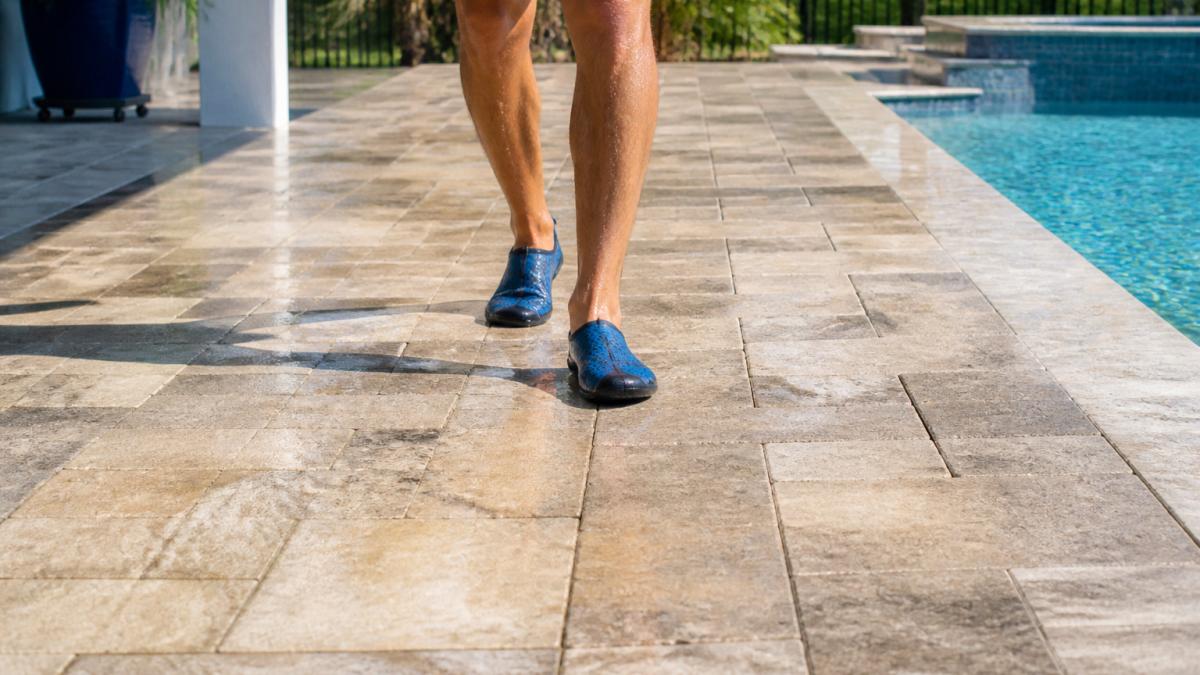
Look for textured surfaces such as tumbled, sandblasted, brushed, or split-face finishes. These create grip under wet feet. Avoid high-gloss finishes on any area where people walk barefoot or in wet swim shoes.
Ask any supplier or installer for the finish name and how it performs when wet. A finish that looks good dry may be the wrong choice for a pool surround.
Free consultation & estimate →
How Wet-Surface Traction Is Actually Evaluated
Vague claims that a paver is “slip-resistant” are not enough. Traction is measured, and the measurement method matters. Two common approaches are:
- Coefficient of friction (COF) testing, a standardized test that measures the ratio of the force required to slide one surface over another. Higher values indicate more grip. The test can be run dry or wet, and the wet result is the one that matters around a pool.
- Ramp or pendulum tests, methods that simulate a foot or heel sliding across a wet surface at an angle. These produce a rating that can be compared across materials when the same method is used.
When you ask a supplier about slip resistance, ask three specific questions: Which test method was used? Was the surface tested wet or dry? Can I see the published result? A finish name alone does not tell you how the paver performs when wet.
How to Test Wet-Surface Traction Before You Buy
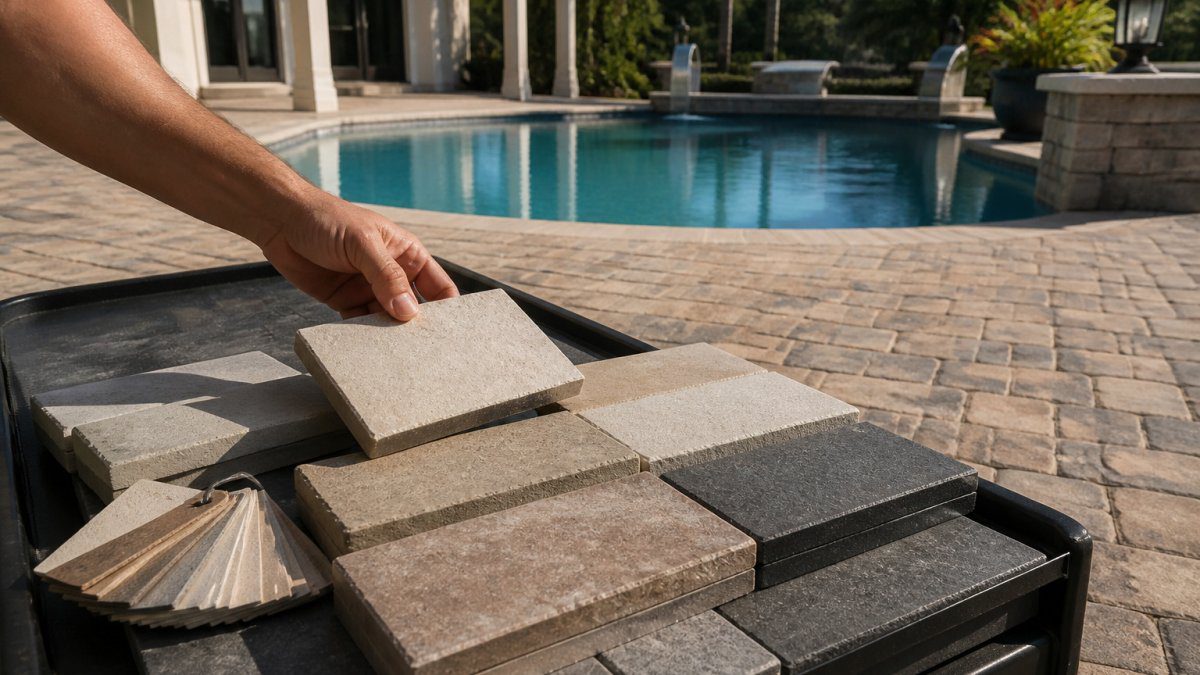
Before committing to a material, test a sample. Wet a sample paver with a garden hose, then walk across it in the shoes you’ll wear around the pool.
Repeat the test on a sample that has been in the sun for an hour, since a surface that feels fine in shade can behave differently when warm.
Keep the sample on hand while you compare options. Traction you can feel in your own shoes tells you more than a finish name on a spec sheet.
Why Wet Traction Varies by Material and Finish
Wet traction depends on more than the material name. Surface texture, joint width, and drainage all interact:
- Texture, a tumbled or brushed finish creates microscopic high points that channel water away from the foot. A polished or honed finish can trap a film of water that reduces grip.
- Joint width, wider joints with sand or polymeric joint material can improve drainage and reduce standing water, but very wide joints can be less comfortable barefoot.
- Drainage slope, a deck that sheds water quickly stays safer after rain or splashing. Confirm the installer plans a proper slope away from the pool and home.
- Sealing, some sealers can make a surface slicker when wet. Ask whether the sealer you plan to use affects wet traction, and test a sealed sample if possible.
A material that scores well on paper can still underperform if the finish, joint design, or drainage is wrong for your site. Use test data as a starting point, then confirm with a wet sample in your own conditions.
Heat, Color and Surface Temperature
Surface temperature changes how comfortable a pool deck feels, especially in Florida’s midday sun. Dark pavers absorb more heat than light ones, and some materials hold heat longer than others.
Lighter colors reflect more sunlight and tend to stay cooler underfoot. Natural stone such as travertine often feels cooler than dark concrete.
When you choose color, consider both appearance and how the surface feels after a full day in the sun. Test a sample outdoors in the afternoon before deciding.
Pool Deck Paver Maintenance by Material
Every paver needs upkeep, but the routine differs by material. Plan for maintenance before you install, not after the first stain appears.
- Concrete pavers: Clean regularly to prevent staining and algae. Sealing can help protect color and reduce water absorption.
- Natural stone: Seal on a schedule recommended by the installer, and clean with products made for stone. Acidic cleaners can etch travertine and limestone.
- Porcelain: Requires less sealing. Keep joints clear and clean spills promptly to avoid buildup.
Pool chemicals and salt exposure affect all materials, so rinse the deck periodically and keep chemical splashes off the surface. Ask your installer for a maintenance schedule specific to the material you choose. Long-term structural integrity also depends on the underlying pool resurfacing materials, which should be assessed for compatibility with your chosen deck finish to ensure a cohesive and durable outdoor environment.
Booking Your Pool Deck Paver Consultation
A good pool deck paver project starts with a conversation about your site, your budget, and how you use the space. When you are ready to hire, you can find and book the best pool paver contractor directly. Venice Pavers offers a free consultation and estimate.
Pricing depends on quantity, materials, site access, and delivery, so an on-site estimate gives you the most accurate figure. To get started, request your free consultation.
Frequently Asked Questions
What type of pavers are best for a pool deck?
Textured concrete pavers and textured natural stone are the most common choices for pool decks because they balance traction, durability and cost. Choose a textured or tumbled finish rather than a polished one, since smooth surfaces get slippery when wet. Compare samples under Florida sun and near the water before committing, and ask your installer how each material handles pool chemicals and salt exposure. The best choice depends on how much barefoot use the deck gets and how much maintenance you are willing to do.
Are natural stone or porcelain pavers better for pool decking?
Natural stone such as travertine offers a classic look and good traction when it has a honed, tumbled or flamed finish, but it can absorb heat and needs periodic sealing. Porcelain pavers are dense, resist staining and chemicals well, and often stay cooler in direct sun when light-colored. Neither is universally better. Natural stone suits buyers who want a organic appearance and will maintain it, while porcelain suits those who want low upkeep and consistent color.
How do you choose pool pavers that are slip-resistant?
Look for textured, sandblasted, brushed or tumbled finishes and avoid polished or highly glazed surfaces near the water. Ask the supplier for slip-resistance information or wet-surface test data for the specific product rather than relying on the material name alone. Sample pavers should be wetted and walked on before purchase. Keep in mind that texture can wear over time, so consider how the finish will hold up after years of pool chemicals and foot traffic.
How should pool deck pavers be maintained?
Sweep regularly, rinse off pool chemicals and salt residue promptly, and clean with a pH-neutral paver cleaner rather than harsh acids that can etch stone. Reseal natural stone and some concrete pavers on the schedule your installer recommends, usually every few years depending on exposure. Keep joint sand in good condition and address any shifting or settling quickly, since drainage and base problems cause most long-term paver issues. Ask Venice Pavers for a maintenance plan tailored to your material.