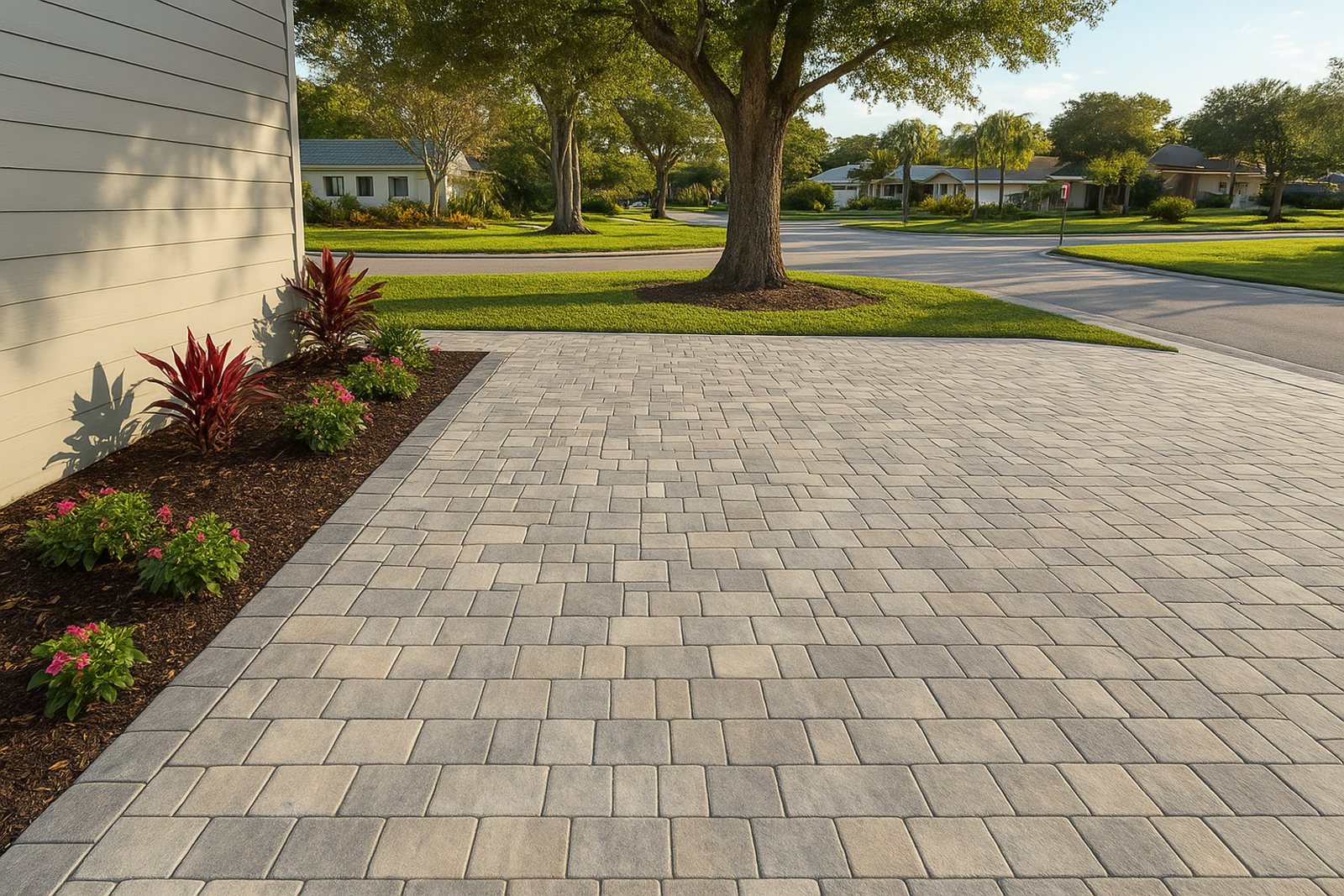
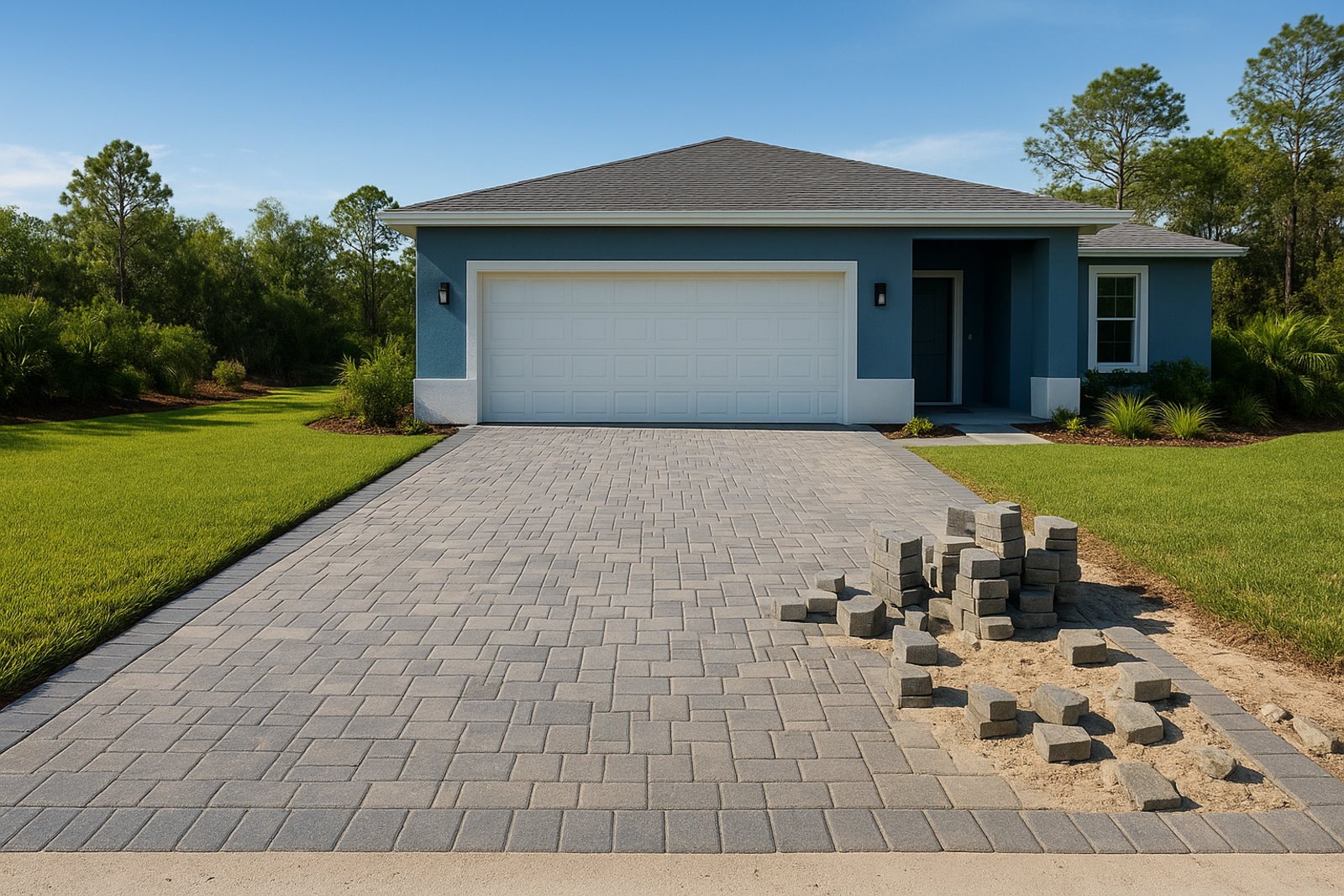
Oil and rust stains on driveway pavers, from car drips and well water, are two of the most common complaints on Southwest Florida driveways. The good news is that pavers give you more options than concrete.
Fresh oil drips
Act quickly. Blot up what you can, then cover the spot with an absorbent such as cat litter and let it sit before sweeping it up. A degreaser made for concrete pavers, scrubbed in and rinsed, takes care of most of the rest.
Old oil stains
Older stains may need a paver-specific oil stain remover and more than one application. Always test any cleaner on a small hidden area first.
Rust stains from irrigation
Orange stains usually come from iron in well water hitting the pavers. A rust remover made for pavers can lift them. To stop new stains, adjust sprinkler heads so they do not spray the driveway, or ask an irrigation company about treating the water.
When to replace instead
If a stain will not come out, a single paver can be lifted and replaced. That is one of the main advantages of pavers over a concrete slab.
Prevention
Sealing helps pavers resist stains and makes cleanup easier. Read how to clean driveway pavers and our sealer guide, or ask us about cleaning and sealing.
Keeping Oil and Rust Stains Off Driveway Pavers
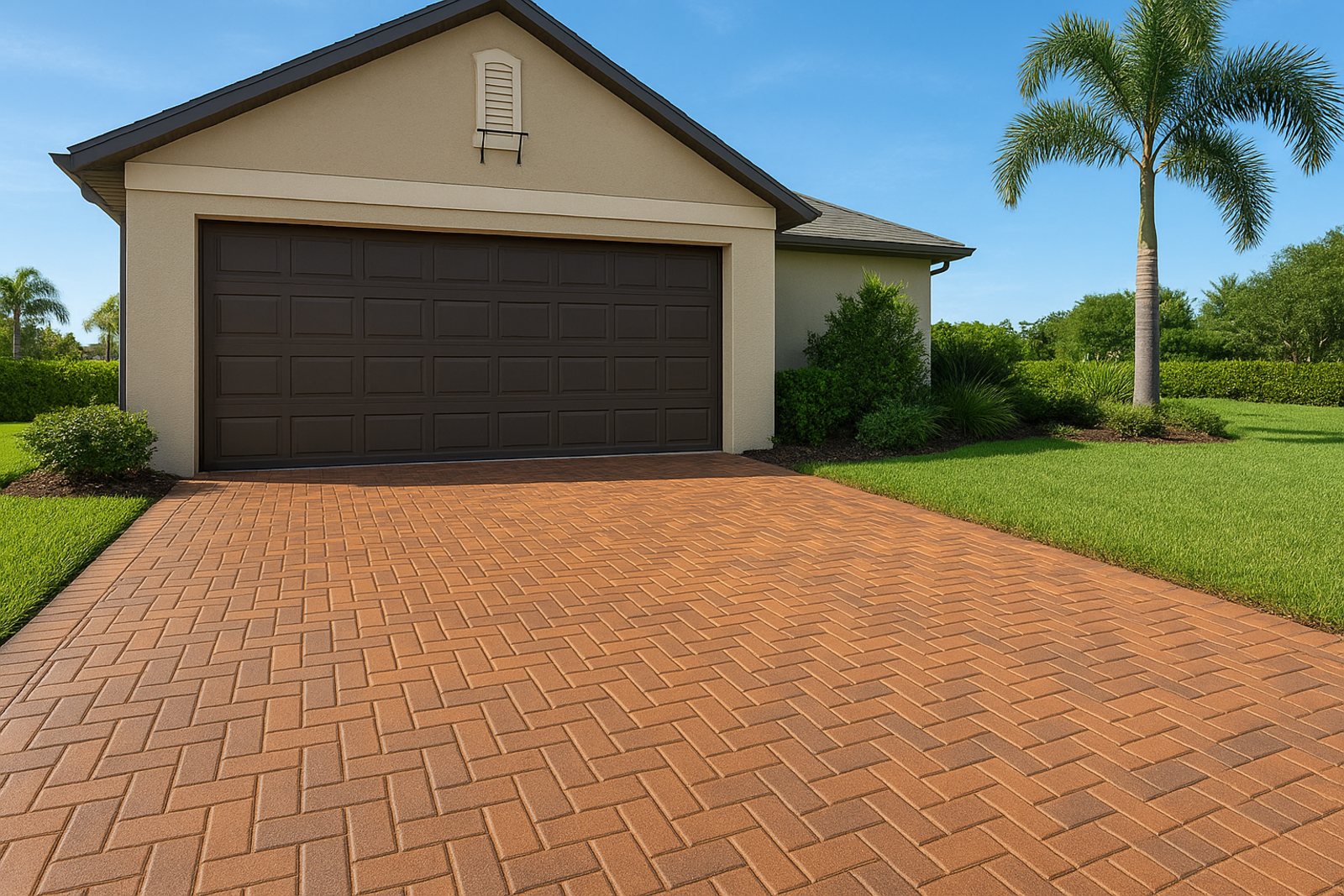
A few habits keep oil and rust stains on driveway pavers from coming back. Fix leaking vehicles, park over a drip mat while you wait on a repair, and check sprinkler heads after any irrigation work. Avoid holding a pressure washer tip too close to the surface, since it can blow out joint sand. Always follow the cleaner maker’s directions; the Interlocking Concrete Pavement Institute (ICPI) also publishes guidance on cleaning pavers.
Thinking about a new driveway? Venice Pavers & Landscape offers a free on-site walk-through and a written, itemized estimate. Request your estimate or see our paver driveway options.