Is It Worth Adding a Retaining Wall for Drainage?
Is it worth adding a retaining wall for drainage? Often, yes: retaining wall drainage prevents costly water damage and foundation problems.
Last Updated: October 23, 2026
Quick Summary
Is it worth adding a retaining wall for drainage? Yes, when properly designed with drainage systems that redirect water and manage hydrostatic pressure. A well-built retaining wall prevents standing water, soil erosion, and costly property damage while stabilizing your grade for long-term protection.
- Standing water persisting over 24 hours indicates a drainage problem that worsens over time and damages soil structure.
- Retaining walls must include perforated pipe, gravel backfill, and proper lean to manage water flow and prevent structural failure.
- Hydrostatic pressure from saturated soil is a primary cause of wall failure, cracks, and collapse without proper drainage design.
- Water damage costs compound over 5-10 years, making a properly installed retaining wall typically pay for itself through avoided repairs.
- Professional site assessment is essential before installation to identify root causes and determine if a retaining wall is the right solution.
Table of Contents
- When Standing Water Signals You Need a Retaining Wall
- How Retaining Wall Drainage Systems Prevent Property Damage
- Retaining Wall Types and Their Drainage Effectiveness
- Preventing Retaining Wall Failure Through Proper Design
- The Real Cost: Installation vs. Water Damage Repairs
- Key Factors to Consider Before Installing a Retaining Wall
- Common Mistakes Homeowners Make With Retaining Wall Drainage
- Frequently Asked Questions
When Standing Water Signals You Need a Retaining Wall
Standing water in your yard is more than an aesthetic problem. It’s a warning that your property’s drainage system isn’t working. When water pools near your foundation, landscape beds, or patio after rain, the ground beneath your hardscape absorbs moisture it can’t shed.
A retaining wall designed with proper drainage doesn’t just hold back soil. According to Cascade Outdoor Services’ 2026 retrofit guide, hydrostatic pressure is identified as a primary cause of wall failure, cracks, and structural collapse.
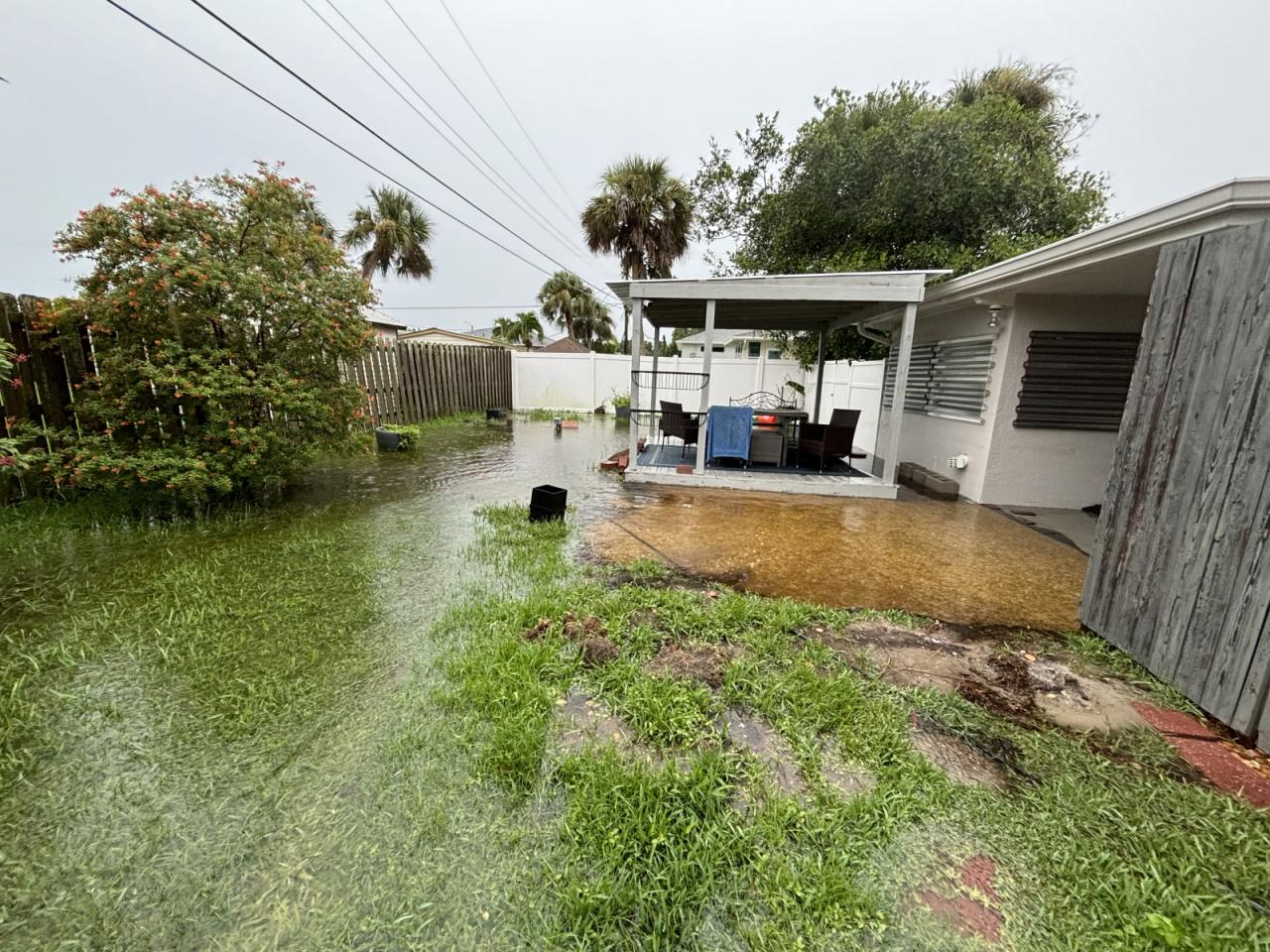
Residential backyard showing visible standing water pooling near foundation, muddy ground, and overgrown vegetation indicating drainage problems
Before deciding whether a retaining wall makes sense, you need to understand what’s causing the water to accumulate. Is it poor grading, a low spot, runoff from a neighbor, or water flowing toward your foundation?
How Retaining Wall Drainage Systems Prevent Property Damage
The structural necessity of proper drainage in retaining walls has become non-negotiable in professional landscape design. As regional building requirements in 2026 now mandate, retaining walls must be designed to manage water flow.
Without drainage, water accumulates behind the wall, pressure builds, and that pressure pushes against the structure. The wall leans, cracks, and eventually fails as the uphill soil keeps moving downward.
A properly designed retaining wall includes a drainage system that works on multiple levels. Perforated pipe behind the wall collects water and channels it away, gravel backfill lets water flow through instead of pooling, and the wall is built with a slight backward lean to resist pressure.
So for homeowners, this means the wall actually protects your property. It stops water from pooling, prevents soil erosion, and stabilizes the grade so your patio, driveway, or landscaping doesn’t shift. It’s not just about holding soil back, it’s about managing the water that moves through it.
Retaining Wall Types and Their Drainage Effectiveness
Not all retaining walls are built the same way, and their drainage performance varies significantly. Understanding the differences helps you decide which type makes sense for your property and your specific drainage challenge.
Segmental Retaining Walls
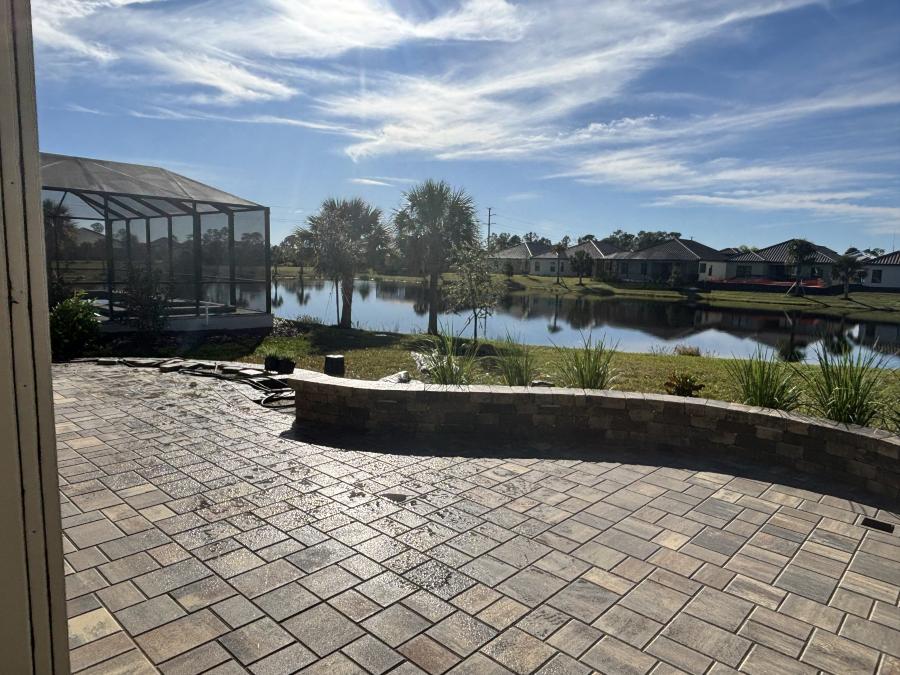
Segmental retaining walls are made of interlocking concrete blocks, modular, quick to install, and available in various styles and colors. Their drainage advantage: the spaces between blocks naturally allow water to drain through, while compacted backfill and perforated pipe along the base collect and redirect water.
The key to segmental wall performance is proper installation: blocks stacked level, backfilled correctly, and geogrid reinforcement added for taller walls as soil pressure builds. Built correctly with drainage planning from the start, they manage water effectively, and if a block shifts or cracks, it can often be replaced without rebuilding the entire wall.
Gravity Walls
Gravity walls rely on mass and weight to resist soil pressure. Typically made of stone, concrete, or timber, they stay in place by being heavy enough to counter the soil pushing against them. They’re usually under 4 feet tall, since the weight required for taller walls becomes impractical.
Drainage in gravity walls is more challenging because water can’t flow through a solid mass, it must be managed behind the wall and at the base. Without proper drainage planning, water accumulates and pressure increases, eventually tipping the wall forward or causing uneven settling. Gravity walls are less forgiving than segmental walls; once built, major repairs are difficult.
Reinforced Concrete Walls
Finally, crews pour reinforced concrete walls in place or build them from large panels. They’re engineered structures designed to handle significant soil pressure and height, with reinforcement steel providing tensile strength to resist bending and cracking as pressure builds.
These walls require careful drainage design because water can’t pass through concrete, perforated pipe behind the wall and proper backfill are essential. Designed and built correctly, they’re extremely durable and handle demanding applications, often in commercial settings or challenging soil. The downside is cost and complexity: these aren’t DIY projects and require professional engineering and installation.
|
Wall Type |
Drainage Path |
Best For |
Key Consideration |
|---|---|---|---|
|
Segmental |
Through blocks and backfill |
Residential properties, moderate heights |
Proper backfill and geogrid crucial |
|
Gravity |
Behind and below wall |
Lower walls, stable soil |
Heavy weight needed, limited height |
|
Reinforced Concrete |
Behind wall only |
High walls, commercial, challenging soil |
Requires professional engineering |
Preventing Retaining Wall Failure Through Proper Design
Most retaining wall failures don’t happen because the wall was built wrong in the moment. They happen because drainage wasn’t planned properly from the start. The wall holds fine for a year, maybe two. Then water accumulates, pressure builds, and the wall begins to fail.
Preventing failure starts with understanding what’s happening on your property before the wall is ever built. What’s the soil type? How does water naturally flow across your land? Where does runoff go during heavy rain?
The wall itself must be designed for your specific conditions. Height, material, reinforcement, and drainage all depend on soil type, water management needs, and the grade change.
Behind the wall, proper backfill is also non-negotiable. Compacted gravel allows water to drain while providing support. Perforated pipe then collects water and channels it away from the wall. These details matter. They’re the difference between a wall that lasts 20 years and one that fails in 5.
The Real Cost: Installation vs. Water Damage Repairs
When you’re evaluating whether is it worth adding a retaining wall for drainage, you’re really comparing two costs: the cost of installing the wall now versus the cost of water damage repairs later.
Water damage compounds over time. Standing water near your foundation can lead to cracks, basement moisture, and structural problems. Similarly, pooling under your patio shifts pavers, creating trip hazards and requiring replacement. Erosion also undermines landscaping, washes away topsoil, and destabilizes slopes.
Free consultation & estimate →
A retaining wall with proper drainage addresses these problems proactively, preventing pooling, redirecting runoff, and stabilizing your grade. You can also explore drainage solutions for patios that complement retaining wall decisions. The wall is an investment, but one that protects everything else on your property.
For many homeowners, the decision comes down to this: would you rather spend on a solution now, or deal with escalating water damage costs over the next 5-10 years? In fact, a properly designed and installed retaining wall typically pays for itself in avoided repairs within that timeframe.
Key Factors to Consider Before Installing a Retaining Wall
Before committing to a retaining wall, evaluate these factors to determine if it’s the right solution for your property.
Grade and slope: How much elevation change are you managing? A 3-foot grade change is different from a 6-foot drop.
Soil type: Clay, sand, and loam behave differently when wet. Clay holds water and becomes very heavy; sandy soil drains quickly but can shift.
Water flow patterns: Where does water come from, uphill runoff, poor grading, or a neighbor’s drainage?
Existing hardscape: Do you have a patio, driveway, or landscaping that’s already experiencing problems? At Venice Pavers, we landscape drainage installation solutions that work alongside retaining walls when necessary.
Budget and timeline: Retaining walls require professional installation. The project timeline and cost depend on wall height, material, site conditions, and the complexity of drainage planning.
Long-term maintenance: A properly built wall needs minimal maintenance, periodic drainage inspection and vegetation management to prevent root damage. Over decades, a well-built wall holds up without major intervention.
Common Mistakes Homeowners Make With Retaining Wall Drainage
Homeowners often make the same mistakes when planning retaining walls, and these mistakes lead to problems that could have been prevented.
Underestimating water volume: Many people don’t realize how much water moves across their property during heavy rain.
Skipping professional grading assessment: Some homeowners assume a retaining wall will fix any drainage problem. But if the underlying grade is wrong, a wall might just move the problem elsewhere. How to grade land correctly is foundational to any drainage solution.
Choosing wall type based on appearance alone: Aesthetics matter, but they shouldn’t override drainage performance.
Neglecting backfill and drainage details: These details are invisible once the wall is finished, so homeowners sometimes skip them to save money. This is the worst place to cut corners.
Installing without permits: Building codes exist for a reason. Permitted installations are inspected to ensure they meet standards.
Assuming drainage works without maintenance: Even a well-designed drainage system needs occasional attention. Perforated pipe can become clogged. Vegetation can also damage the wall. Periodic inspection catches problems before they become serious.
Standing water gets worse, not better, over time. The question isn’t whether to address it, but how.
Venice Pavers has spent over 30 years designing retaining wall systems that actually manage water instead of just holding soil. Our obsessive focus on base preparation and drainage planning means your wall works the way it’s supposed to, for decades. Get a free consultation and estimate to see whether a retaining wall is right for your property, or explore other drainage solutions that might fit your situation better.
Frequently Asked Questions
Does a retaining wall help with yard drainage?
Yes, a properly designed retaining wall with integrated drainage systems redirects water away from your property and reduces hydrostatic pressure on soil. However, the wall alone doesn’t solve drainage—it’s the drainage system built into and behind the wall that manages water flow. However, without adequate drainage design, a retaining wall can actually trap water and cause more problems. Professional planning ensures the wall and its drainage work together to protect your foundation and landscape.
What happens if you build a retaining wall without drainage?
A retaining wall without proper drainage accumulates water pressure behind it, leading to leaning, cracking, and eventual structural failure. Water builds up in the soil behind the wall, creating hydrostatic pressure that pushes against the structure. This can cause the wall to bow outward, develop cracks, or collapse entirely. You may also experience increased erosion, soggy soil, and damage to nearby foundations or hardscapes. Drainage is not optional—it’s essential to the wall’s longevity.
How do you fix standing water in a backyard with a retaining wall?
Standing water can be addressed by adding drainage behind an existing wall, improving surface grading to direct water away, installing French drains or perforated pipes, or creating swales to redirect flow. The best solution depends on your wall’s current design and your property’s slope. Adding drainage to an existing wall may involve retrofitting perforated pipe at the base or top of the wall. A professional assessment identifies whether the wall itself is the problem or if surface drainage improvements alone would solve the issue.
Is it expensive to add drainage to a retaining wall?
Drainage costs depend on the wall’s size, existing condition, soil type, and how much excavation is needed. Retrofitting drainage to an existing wall is typically less expensive than removing and rebuilding the wall, but more costly than installing drainage during the original construction. For that reason, planning drainage upfront during wall installation is the most cost-effective approach. Rather than guessing at costs, a site evaluation determines the specific work needed and helps you understand the investment relative to the cost of water damage repairs.