Table of Contents
- What to Expect When You Get a Quote for Paver Repair
- Signs Your Pavers Need Repair
- How to Fix Sinking Pavers: Causes and Solutions
- Your Paver Repair Estimate Checklist
- Average Cost of Paver Patio Repair: What Affects the Price
- DIY vs. Professional Paver Repair: Which Is Right for You?
- Frequently Asked Questions
Last Updated: September 18, 2026
What to Expect When You Get a Quote for Paver Repair
When you get quote for paver repair, a qualified contractor will inspect your pavers, identify the cause of the damage, and provide a written estimate covering materials, labor, and any base or drainage work. At Venice Pavers, we’ve handled hardscape projects across Southwest Florida for over 30 years, and we’ve seen how much estimates vary when contractors skip the diagnostic step.
Signs Your Pavers Need Repair
The clearest signs your pavers need repair are cracked, shifted, or sunken stones, pooling water after rain, and joint sand that keeps washing out. These symptoms rarely fix themselves.
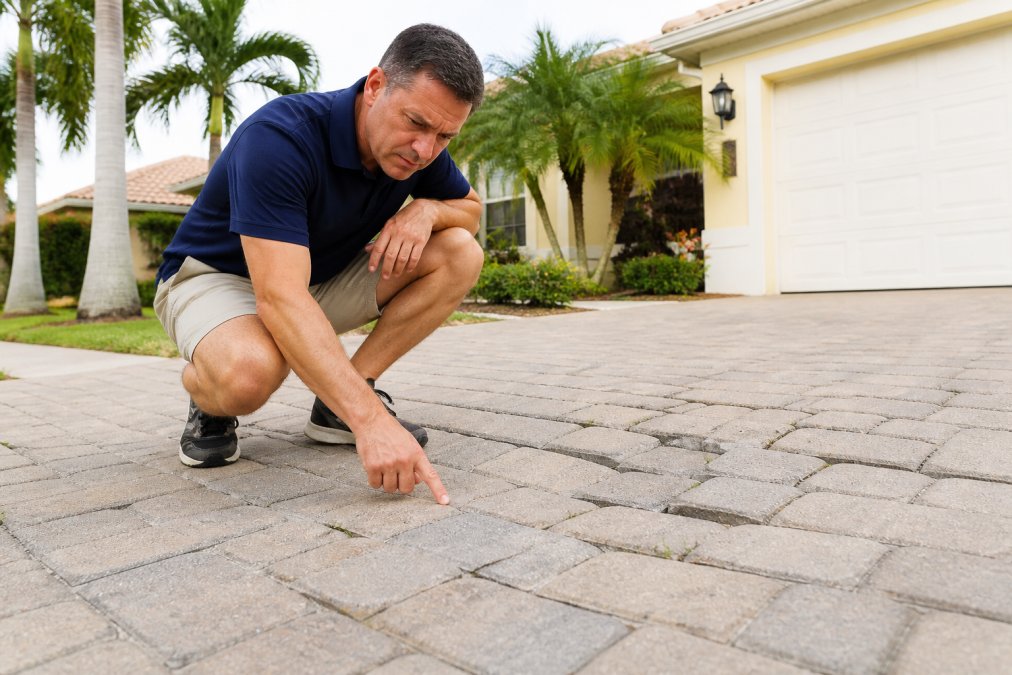
- Pavers that wobble or shift when stepped on
- Water pooling on the surface hours after rain
- Sand washing out of joints after storms
- Cracks running across multiple pavers
- Visible dips or ridges along a driveway or walkway
Visual Inspection Guide: What to Look For
Walk your patio or driveway after a heavy rain and note where water stands. Standing water points to a drainage or grading problem, which no amount of surface patching will solve. Then check the joints: if polymeric sand is missing in strips, the pavers are moving. Finally, look at the edges. Edging that has pulled away lets the whole field spread, and that’s a base issue, not a cosmetic one.
How to Fix Sinking Pavers: Causes and Solutions
Sinking pavers almost always trace back to base failure, poor drainage, or soil movement beneath the surface. Fixing them means addressing the cause, not just lifting the stones.
Your Paver Repair Estimate Checklist
A solid paver repair estimate checklist should cover scope, materials, base work, drainage, timeline, and warranty. Bring this list to every quote you collect:
- Written scope of work, including which areas get repaired
- Whether base or sub-base repair is included
- Drainage and grading plan for the affected area
- Type of joint sand or polymeric sand specified
- Whether matching replacement pavers are available
- Project timeline with start and completion dates
- Warranty terms, in writing, with what’s covered
- Proof of license and insurance
Average Cost of Paver Patio Repair: What Affects the Price
Most homeowners searching for a paver repair quote want one thing first: a realistic cost range. The honest answer is that paver repair is priced by the job, not by a flat rate, because the same square footage can cost three or four times more depending on what’s happening under the surface. A single cracked paver on a stable field is a quick swap.
What Actually Drives the Price
- Square footage of the repair area: Labor and materials scale with area, but not linearly. Small repairs carry a minimum mobilization cost, so the per-square-foot price on a 20-square-foot fix is often higher than on a 200-square-foot section.
- Surface repair vs. base repair: Replacing cracked or chipped pavers and re-sanding joints is the least expensive category. Once the base is involved, the scope expands to removal, excavation, re-compaction, and reinstallation.
- Base and sub-base condition: A properly compacted, well-draining base is the single biggest factor in how long a repair lasts. If the sub-base has settled, softened, or was never compacted correctly, that work has to be redone before any paver goes back down.
- Drainage and grading: Regrading a slope, correcting a low spot, or adding a channel drain or French drain changes the scope significantly. Drainage work is often the difference between a repair that holds and one that fails again after the next rainy season.
- Material matching: If your pavers are still in production, matching is straightforward. If the line has been discontinued or the color lot has shifted, a contractor may need to replace a larger area so the repair blends, which raises the material and labor cost.
- Access and equipment: Tight side yards, gated patios, and pool decks slow down equipment and add labor hours. A driveway with open access is faster to work on than a courtyard.
- Joint sand type: Standard joint sand is inexpensive but washes out faster. Polymeric sand costs more up front but resists erosion and weeds, which matters in a heavy-rain climate.
Why You Won’t See a Flat Per-Square-Foot Number Here
A flat rate assumes every repair is the same. It isn’t. Two driveways of identical size can need completely different scopes depending on base condition, drainage, and how far the movement has spread. That’s why a legitimate estimate starts with an on-site assessment, not a phone quote. If a contractor gives you a firm number over the phone without seeing the site, treat that as a red flag, not a convenience.
How to Compare Two Quotes Fairly
- Is base or sub-base repair included, or is this a surface-only fix?
- Is drainage addressed, and if so, how?
- What joint sand is specified?
- Are replacement pavers from the same manufacturer and color lot?
- What does the warranty cover, and for how long?
A quote that’s dramatically lower than the others usually means something was left out of the scope, most often base preparation or drainage. That omission is exactly where paver failures start, and it typically leads to a second repair within a few years.
Paver repair pricing is driven by scope, not square footage alone. The three line items that move a quote the most are base condition, drainage work, and material matching. Get every one of them in writing before you compare numbers.
Venice Pavers provides free on-site estimates so your number reflects your actual site conditions, not a national average. We’ll walk you through the scope line by line so you know exactly what you’re paying for and why.
DIY vs. Professional Paver Repair: Which Is Right for You?
Most articles on paver repair push you straight to a quote. That’s fine if you already know the job is beyond you, but it’s not helpful if you’re standing in your driveway trying to figure out whether you’re looking at a weekend project or a structural failure. This section gives you a decision framework instead of a sales pitch.
The Core Distinction: Surface Wear vs. Structural Failure
Before you decide anything, diagnose what you’re actually looking at. Paver problems fall into two categories, and they require completely different responses.
Surface wear is cosmetic or near-cosmetic. It includes:
Free consultation & estimate →
- Faded or stained pavers
- Joint sand that has washed out but the pavers themselves are stable
- A single chipped or cracked paver surrounded by solid, level neighbors
- Efflorescence (the white, chalky haze that sometimes appears on new pavers)
Structural failure involves movement or water. It includes:
- Pavers that rock or wobble when you step on them
- Visible dips, ridges, or unevenness across multiple pavers
- Water pooling on the surface hours after rain
- Joint sand washing out repeatedly after storms
- Edging that has pulled away from the field
- Cracks running across multiple pavers in a line
A Simple Self-Assessment Checklist
Walk your patio or driveway and answer these questions honestly:
- Is the problem limited to one or two pavers, or does it span a larger area?
- Do the surrounding pavers feel solid and level when you step on them?
- Does water drain away within an hour or two after rain, or does it stand?
- Is the joint sand intact around the affected area, or is it missing in strips?
- Has the problem appeared suddenly, or has it developed gradually over years?
- Is the affected area near a downspout, slope, or low point where water collects?
What’s Realistic to DIY
A few repairs are genuinely within reach for a handy homeowner:
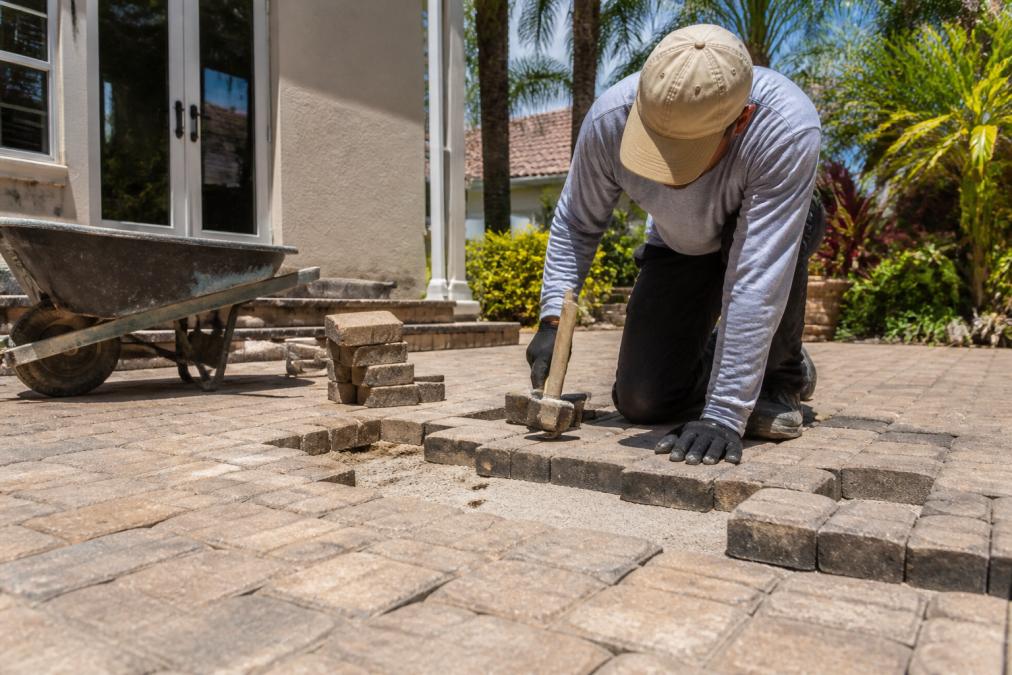
- Replacing a single cracked paver: Lift the damaged paver, scrape out the old bedding sand, set a matching replacement on a fresh bed of sand, and re-sand the joints. This is a few hours of work with basic tools.
- Refilling joint sand: Sweeping new polymeric or joint sand into the joints and compacting it is straightforward maintenance, not repair.
- Cleaning and resealing: After a thorough cleaning, applying a paver sealer is a manageable DIY project if you follow the manufacturer’s instructions on temperature and dry time.
What Isn’t Realistic to DIY
These jobs require equipment and expertise that most homeowners don’t have:
- Base repair: Fixing a failed base means removing pavers, excavating the sub-base, re-compacting in lifts, re-screening the bedding layer, and reinstalling. Without a plate compactor and the knowledge to use it correctly, the repair won’t hold.
- Drainage correction: Regrading a slope or installing a drain requires understanding how water moves across the whole site, not just the affected area.
- Large-area re-leveling: Once movement has spread across a section, the fix is a rebuild, not a patch.
Material Matters: Not All Pavers Repair the Same Way
One thing most guides skip: the paver material changes the repair approach.
- Concrete pavers: The most common in residential hardscapes. They’re uniform in size, widely available in matching lots, and the most straightforward to replace individually. Color lot matching is the main challenge on older installations.
- Brick pavers: Often older and set in a different bedding system. Replacement bricks may need to be sourced from a salvage yard or specialty supplier to match size and color. Brick is also more prone to spalling in freeze-thaw climates.
- Natural stone pavers (travertine, bluestone, flagstone): Each piece is unique, so matching a replacement is difficult and sometimes impossible. Stone also varies in porosity, which affects how it should be cleaned and sealed. Repairs often involve re-setting the existing stone rather than replacing it.
When to Call a Professional
Call a professional if any of these apply:
- The problem involves movement, sinking, or standing water
- More than a few pavers are affected
- You can’t identify a matching replacement paver
- The affected area is near a pool, retaining wall, or structure
- You’ve already tried a DIY fix and it didn’t hold
A professional estimate should include a diagnosis of the cause, not just a price. If a contractor can’t explain why your pavers failed, they can’t explain how they’ll fix it.
Before hiring anyone, ask how they handle base preparation and drainage. A contractor who can explain their compaction and grading process in detail is usually the one who won’t cut corners. If the answer is vague, keep collecting quotes.
DIY is realistic for single-paver swaps, joint sand refills, and sealing. Anything involving movement, sinking, or drainage is a base issue and belongs with a professional. Diagnose the problem before you decide, and let the diagnosis drive the quote, not the other way around.
Frequently Asked Questions
What information should I provide when requesting a paver repair quote?
Provide the approximate square footage of the affected area, photos of the damage from multiple angles, and details about any drainage issues or sinking you’ve noticed. Mention the paver material if you know it, and note how long the problem has been visible. This helps contractors give a more accurate paver repair estimate and reduces back-and-forth.
Do professional paver companies offer free estimates for repairs?
Many reputable paver repair companies offer free estimates, including Venice Pavers. A free estimate typically includes an on-site assessment of the damage, a discussion of repair options, and a written project quote. Ask upfront if there’s a charge for the estimate, and confirm what the quote covers so you can compare offers fairly.
How do contractors calculate the cost of paver repair?
Contractors calculate cost based on square footage, the extent of base failure, accessibility, and whether replacement pavers are needed. Labor costs vary with the complexity of paver leveling, joint sand replacement, and drainage fixes. Material-specific factors like polymeric sand or matching existing pavers also affect the final price. Always request a breakdown in your quote.
Should I get multiple quotes for my paver repair?
Yes, getting at least two or three quotes helps you compare pricing and scope. But don’t choose based on price alone. Look for detailed estimates that specify materials, labor, and timeline. Ask about workmanship guarantees and check reviews. A slightly higher quote from a licensed, insured contractor with a solid track record often saves money long-term.