
Table of Contents
- Is a Paver Driveway a Good Investment? The Real Value Proposition
- Paver Driveway Pros and Cons: What You Need to Know
- Paver Driveway vs. Concrete: Durability, Cost, and Performance
- Paver Driveway Lifespan: How Long Will It Really Last?
- Paver Driveway Maintenance: Time and Cost Expectations
- Curb Appeal and Resale Value: Does It Pay Off?
- Choosing the Right Solution for Your Property
- Frequently Asked Questions
Last Updated: October 17, 2026
Is a Paver Driveway a Good Investment? The Real Value Proposition
Whether is a paver driveway a good investment depends on whether you prioritize long-term durability, customization, and curb appeal over the lowest upfront cost. At Venice Pavers, we’ve worked with hundreds of homeowners who faced this exact question. The answer depends on your timeline, property goals, and how you define “value.”
Paver driveway cost is marginally more to install than asphalt or concrete. But they last longer, look better, and can be repaired piece by piece rather than replaced entirely. The real question isn’t whether pavers are expensive, it’s whether the benefits justify the investment for your specific situation.
Most homeowners underestimate how much curb appeal drives first impressions. A well-designed paver driveway transforms your home’s entrance. Buyers notice it. Guests notice it. You notice it every time you pull in. That visual impact has real value.
Paver Driveway Pros and Cons: What You Need to Know
Key Advantages
Paver driveways offer distinct benefits that set them apart from conventional materials. The biggest advantage is flexibility in design. You control the color, pattern, size, and layout.
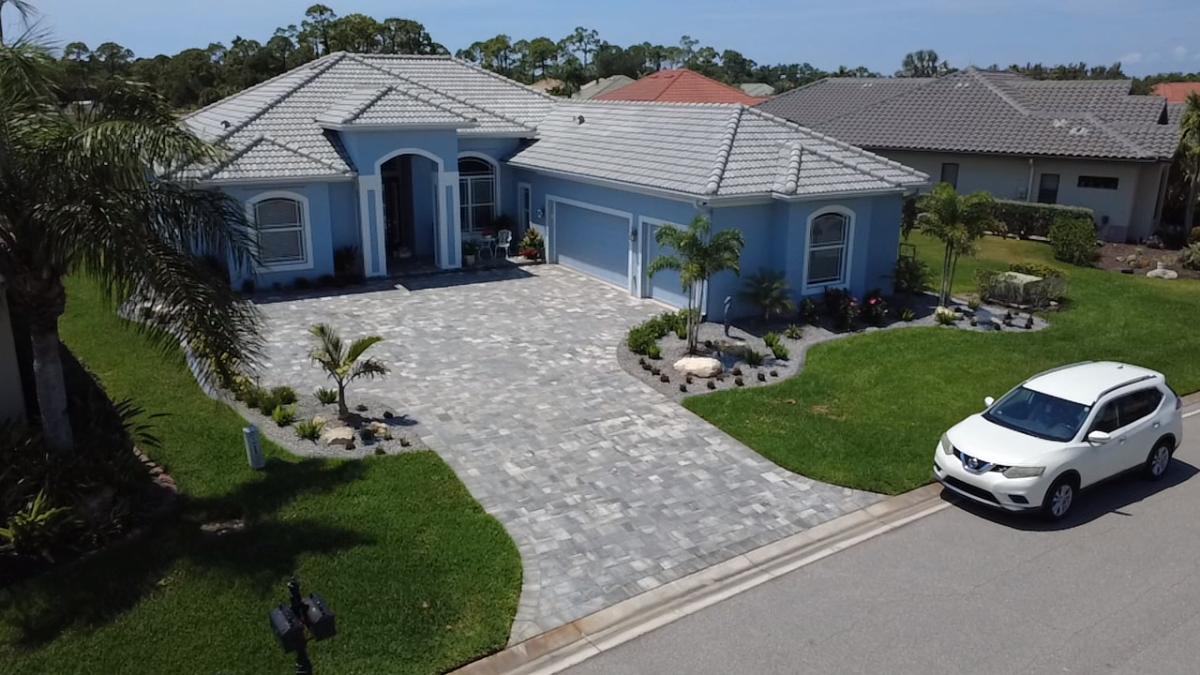
Earth-toned interlocking paver driveway in a herringbone pattern, showing why is a paver driveway a good investment.
Durability is another major strength. Individual pavers can shift slightly without cracking the entire surface. If one paver gets damaged, you replace just that stone, not the whole driveway.
Drainage works better with pavers. Permeable pavers allow water to drain between the stones instead of pooling on the surface. This reduces flooding and helps manage stormwater runoff on your property.
Maintenance is manageable. You sweep, occasionally pressure wash, and refill sand between joints. No seal coating every few years like asphalt requires. No dealing with oil stains like concrete attracts.
Important Drawbacks
The upfront cost is higher than asphalt or concrete. Installation requires careful base preparation, proper compaction, and precise edge restraints. That meticulous work costs more labor and materials. Budget accordingly before committing.
Weeds can grow between pavers if sand washes away. Regular maintenance keeps this under control, but it’s an ongoing task. Some homeowners use polymeric sand to reduce weed growth, which adds to the initial cost.
Settling and shifting happen over time, especially in areas with poor drainage. If the base wasn’t compacted properly, pavers sink unevenly. This is why base preparation matters so much. Poor preparation leads to problems years later.
Finding a qualified contractor that has acproper understanding and focus on BASE PREP makes a difference. Not all paver installers understand drainage planning or execute proper base compaction. A rushed installation saves money upfront but costs you in repairs.
Paver Driveway vs. Concrete: Durability, Cost, and Performance
Most comparisons stop at “pavers cost more upfront.” That’s true, but it’s an incomplete answer. The useful comparison is a like-for-like lifecycle cost over a defined period, with assumptions stated so you can adjust them to your situation.
Upfront installed cost
For a typical two-car driveway of roughly 400 to 600 square feet, installed costs in most U.S. markets fall into these broad ranges:
- Asphalt: lowest upfront cost per square foot, but the shortest service life and recurring seal coating.
- Standard concrete: mid-range upfront cost; poured and finished in a few days.
- Stamped or decorative concrete: approaches paver pricing once pattern, color, and sealer are added.
- Paver driveway: highest upfront cost per square foot, driven by excavation, base depth, compaction, edge restraints, and labor.
Exact numbers vary widely by region, site access, soil conditions, and paver selection. A qualified local contractor should provide a line-item estimate that separates excavation, base material, compaction, edge restraint, bedding sand, pavers, and finishing.
Lifecycle cost over 30 years
A fair comparison holds the time horizon constant. Over 30 years, the assumptions matter more than the sticker price:
- Asphalt typically needs seal coating every few years and full replacement within roughly 15 to 20 years, meaning at least one replacement cycle inside a 30-year window.
- Concrete generally lasts 25 to 30 years but is vulnerable to cracking from ground movement and temperature swings; repairs are often cosmetic patches that don’t restore the original surface.
- Pavers typically last 25 to 50 years with proper base preparation, and individual stones can be replaced without disturbing the rest of the surface.
When you add maintenance, repairs, and replacement cycles, the lifecycle cost gap between pavers and concrete narrows considerably, and in some cases reverses. The upfront premium buys repairability and design flexibility that concrete cannot match.
Durability and performance
Concrete is rigid. When the ground moves, it cracks. Patching looks obvious, and full replacement is expensive. Pavers are flexible: individual units shift slightly without compromising the whole surface, and a damaged paver is swapped out in hours.
Drainage is another differentiator. Permeable paver systems allow water to move between joints and into the base, reducing surface pooling and helping manage runoff. Concrete sheds water to the edges, which is fine when grading is correct but problematic when it isn’t.
Maintenance profile
Concrete needs periodic seal coating to resist staining. Pavers need occasional joint sand refilling and spot weeding. Neither is high-effort, but the type of maintenance differs, and homeowners who dislike seal coating often prefer pavers for that reason alone.
The bottom line
Concrete wins on upfront simplicity. Pavers win on repairability, design flexibility, and long-term performance when installed correctly. The right choice depends on how long you plan to stay, your climate, and whether you value a surface you can repair piece by piece over one you replace in sections.
Paver Driveway Lifespan: How Long Will It Really Last?
A well-installed paver driveway lasts 25 to 50 years. The wide range depends on climate, base preparation, and maintenance. In milder climates with proper drainage, pavers often reach 40+ years.
The foundation determines longevity more than the pavers themselves. If the base is compacted correctly and drainage is planned properly, pavers stay level and stable.
Quality pavers hold up better than budget options. Thicker, denser pavers resist wear and weather. Cheaper pavers may fade or chip faster. Investing in better materials pays off over decades.
Maintenance extends lifespan. Refilling sand between joints prevents weed growth and keeps pavers stable. Removing debris and pressure washing prevent staining and algae buildup. These simple tasks add years to your driveway.
Free consultation & estimate →
Climate matters. Regions with heavy rain stress pavers more than dry climates. Proper drainage mitigates this stress. Homeowners in challenging climates should prioritize drainage planning during installation.
Paver Driveway Maintenance: Time and Cost Expectations
Paver driveway maintenance is straightforward and affordable. Most homeowners spend 2-4 hours per year on basic upkeep. That includes sweeping, occasional pressure washing, and spot weeding.
Sand refilling is the main maintenance task. Over time, sand between joints washes away or compacts. You refill it every 2-3 years depending on rainfall and foot traffic. This is a DIY task or a quick professional job (solve this potential task by properly paver sealing and lock the joint sand in place).
Weed control requires attention. Weeds grow between pavers where sand has eroded. Pull them by hand or use an herbicide designed for pavers. Polymeric sand, applied during installation, reduces weeds significantly but costs extra upfront.
Pressure washing keeps pavers clean and prevents algae or mold growth. Once yearly is typical. Avoid high-pressure settings that can damage sand joints or dislodge pavers.
Repairs are rare if installation was done right. Occasionally, a paver cracks or shifts. Replace the damaged stone and refill sand. This takes hours, not weeks.
Curb Appeal and Resale Value: Does It Pay Off?
Curb appeal is real, but resale value is not automatic. The honest answer is that a paver driveway can support resale value in the right market and the right home, and can be a neutral or even negative line item in the wrong one. Here’s how to think about it without the hype.
What the evidence actually supports
General curb-appeal research consistently finds that exterior appearance influences buyer perception and, in many markets, sale price. What that research does not support is a single universal ROI figure for paver driveways. Anyone quoting one number as if it applies everywhere is oversimplifying.
The more defensible claim is directional: a well-designed, well-installed paver driveway improves first impressions and signals that the home is maintained. Whether that translates into dollars depends on factors below.
The four factors that determine your return
- Local market norms. In neighborhoods where custom hardscaping is common and valued, a paver driveway reads as an upgrade. In neighborhoods where concrete is standard, the premium is smaller and may not be recovered at sale.
- Design fit. A paver design that complements the home’s architecture and landscaping adds value. A mismatched pattern or color adds cost without adding buyer interest.
- Installation quality. Buyers and inspectors notice settling, shifting, and weed growth. A poorly installed paver driveway can read as a liability rather than an asset.
- Time horizon. The longer you stay, the more the durability and enjoyment value compound, and the less the resale question matters.
How to frame the decision
Instead of asking “will I get my money back,” ask three questions:
- Will I enjoy this driveway for the years I plan to stay? If yes, the personal value is real even if the resale premium is modest.
- Does this design fit my home and neighborhood? Fit is the strongest predictor of buyer reception.
- Is the installation quality high enough to hold up? A quality installation protects both function and resale perception.
A note on appraisals
Appraisers generally value driveways as part of the overall property, not as a standalone line item. A paver driveway may contribute to a higher overall impression and support a higher list price, but it is rarely broken out separately. Treat resale value as a supporting benefit, not the primary justification.
The honest bottom line
The strongest case for a paver driveway is durability, repairability, and daily enjoyment. Resale value is a possible bonus in the right market, not a guarantee. Homeowners who go in with that expectation tend to be satisfied; those who buy purely on an ROI promise often are not.
Choosing the Right Solution for Your Property
Start by asking yourself what matters most. Is upfront cost your priority? Concrete wins. Is durability and design flexibility your priority? Pavers win. Is simplicity your priority?
Consider your climate. Proper drainage mitigates stress, but it requires planning. Homeowners in challenging climates should prioritize drainage during installation.
Evaluate your property’s drainage. If water pools on your driveway or foundation, pavers with proper base preparation and permeable options solve the problem.
Think about your timeline. Pavers are a 25-50 year investment. Concrete is 25-30 years. Asphalt is 15-20 years.
Get a professional assessment. A qualified contractor can evaluate your property’s grading, drainage, and soil conditions.
Choosing between a paver driveway and other materials depends on your priorities. If you value durability, design flexibility, and long-term performance, pavers are a solid investment.
Venice Pavers specializes in designing and installing custom paver driveways with meticulous base preparation and drainage planning.
Frequently Asked Questions
Does a paver driveway add value to your home?
Paver driveways enhance curb appeal and can increase buyer interest, but resale value gains depend on your market, property condition, and installation quality. Well-installed pavers signal property care and durability, which appraisers notice. However, don’t expect a dollar-for-dollar return on your investment. The real value lies in enjoying a customizable, long-lasting driveway while you own the home.
How long does a paver driveway last compared to concrete?
Quality paver driveways typically last 25-50 years with proper base preparation and drainage, matching or exceeding concrete lifespans. Unlike concrete, individual pavers can be replaced if damaged, extending the driveway’s functional life. Concrete often lasts 25-30 years but can crack and cannot be repaired section-by-section. Proper installation quality determines longevity more than the material itself.
What maintenance does a paver driveway require?
Annual maintenance includes sweeping, occasional pressure washing, and resealing joints every 2-3 years to prevent weed growth. You may need to reset pavers if settling occurs, though this is rare with meticulous base preparation. Concrete and asphalt require similar or greater maintenance (sealing, crack repair, pothole patching). Pavers offer the advantage of replacing individual stones without affecting the entire surface.
Are paver driveways better than concrete for durability?
Both materials are durable when properly installed, but they fail differently. Pavers resist cracking better and allow water drainage, reducing settling issues. Concrete cracks more easily under stress and temperature changes, and repairs affect the whole slab. Paver durability depends heavily on base preparation and drainage—poor installation leads to early failure. Concrete is more forgiving of installation shortcuts, but pavers outperform when installed correctly.