Table of Contents
- Why Sub-Base Compaction Is Critical for Driveway Longevity
- The Foundation: Understanding Sub-Base Role in Pavement Structure
- How to Compact a Driveway Sub-Base: Step-by-Step Process
- Driveway Sub-Base Thickness: Getting the Depth Right
- Driveway Base Compaction Equipment: Choosing the Right Tools
- What Happens If a Driveway Base Is Not Compacted
- Preventing Settlement, Rutting, and Surface Failure
- Drainage and Water Management Through Proper Compaction
- Frequently Asked Questions
Last Updated: October 21, 2026
Why Sub-Base Compaction Is Critical for Driveway Longevity
A strong Venice paver driveway starts long before you see the pavers or concrete. The real foundation is what lies beneath. Sub-base compaction is the process of firmly pressing down layers of aggregate material to create a stable base that supports everything above it. Without proper compaction, your driveway will fail, not in decades, but in years.
We’ve worked on hundreds of driveways across the region. The ones that last are built on properly compacted sub-bases. The ones that sink, crack, and develop ruts are missing this critical step. The difference isn’t complicated. It’s about doing the work right from the ground up.
This guide explains why sub-base compaction matters, how to do it correctly, and what happens when you skip it. At Venice Pavers, we treat base preparation as seriously as the finished surface. That obsession with foundation work is what keeps our clients’ driveways intact for decades.
The Foundation: Understanding Sub-Base Role in Pavement Structure
The sub-base is the bottom layer of your driveway’s pavement structure. It sits directly on the subgrade (the native soil) and supports the base course above it, which in turn supports your paving surface.
Think of it this way: the pavers are like a suit. Nice to look at, but they don’t make the person. The sub-base is the skeleton. It holds everything together and determines whether the whole structure stays upright or collapses.
A properly compacted sub-base does several things at once:
- Supports vehicle loads, Distributes the weight of cars evenly across the subgrade so no single spot gets crushed
- Prevents settlement, Stops the ground from sinking unevenly, which cracks pavers and creates trip hazards
- Manages water, Allows drainage so moisture doesn’t pool under the driveway and weaken the structure
- Resists movement, Keeps aggregate material from shifting under traffic, which causes rutting and surface failures
- Extends driveway life, A solid base can last 20+ years; a weak one fails in 3-5 years
The sub-base is typically made of crushed stone or gravel, coarse aggregate that locks together when compacted. The compaction process removes air pockets and forces particles to nest tightly. This creates a dense, load-bearing layer that won’t shift or settle over time.
Without compaction, the aggregate remains loose. Vehicles drive over it, and the stones shift. Moisture seeps through. The base sinks. The pavers crack. Water pools. Weeds grow through the gaps.
How to Compact a Driveway Sub-Base: Step-by-Step Process
Proper sub-base compaction follows a specific sequence. Each step builds on the last. Skip one, and the whole system fails.
Preparing the Subgrade
Start with the subgrade, the native soil underneath everything. You need to know what you’re working with.
Remove any topsoil, organic material, or debris. The subgrade should be stable soil, not loose fill. If the soil is soft or unstable, you may need to excavate deeper and replace it with compacted fill. This is where many DIY projects go wrong. People assume the existing ground is fine. It often isn’t.
Grade the subgrade so water drains away from the driveway. Slope it slightly, even a 1-2% grade helps. A flat or concave subgrade traps water, and trapped water destroys driveways.
Compact the subgrade itself if it’s been disturbed. Use a hand tamper for small areas or a plate compactor for larger ones. The subgrade needs to be firm and stable before you add the sub-base material on top.
Applying Aggregate Material
Once the subgrade is prepared, spread your aggregate material, typically crushed stone or gravel. This is your sub-base material.
The size matters. Use crushed stone or paver base in the ¼ inch range or what is known by paver professionals as crushed concrete or 250 sand. Smaller stones pack more tightly. Larger stones create air pockets. Aim for a mix of sizes so smaller pieces fill gaps between larger ones.
Spread the material evenly across the subgrade. Measure the depth as you go. For most residential driveways, 2~3 inches of compacted sub-base is standard. Some heavy-use areas may need 4~6 inches.
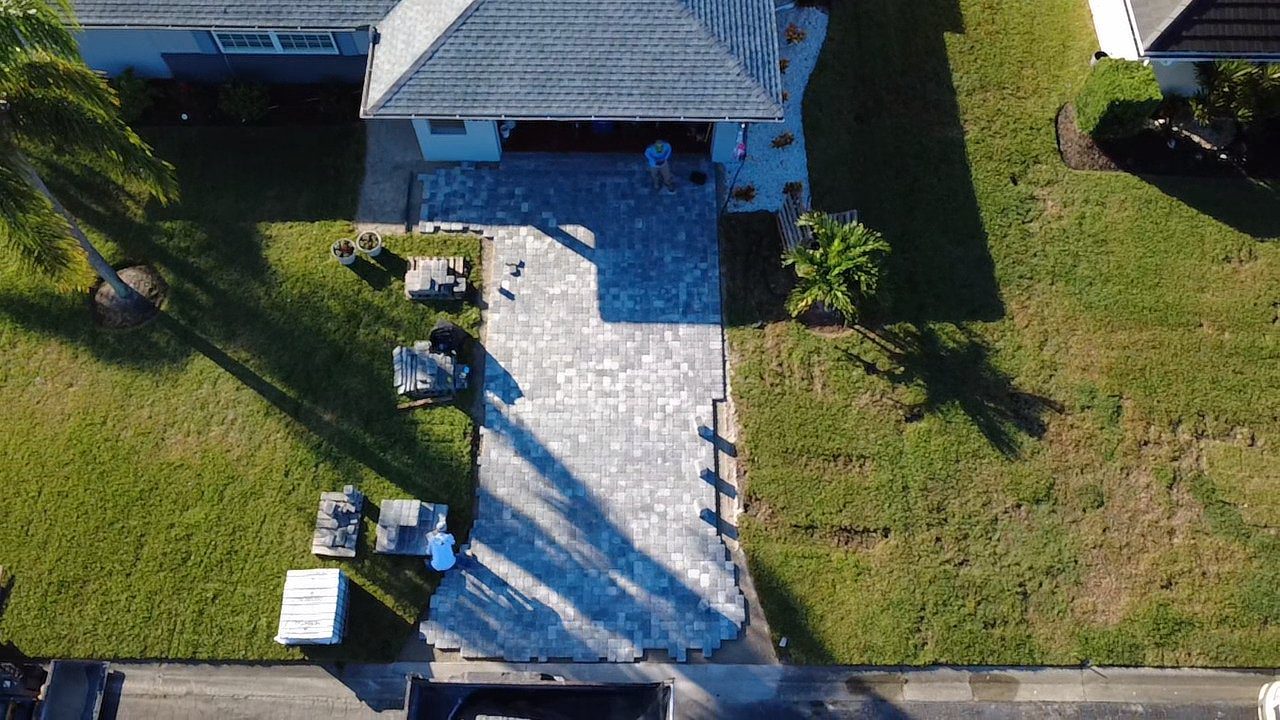
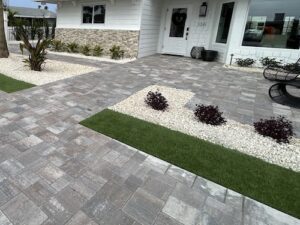
New paver driveway being installed in Venice on a properly compacted paver base after concrete removal.
Compacting in Lifts
This is the critical part. Don’t try to compact the entire depth at once. Work in lifts, thin layers compacted separately.
For most driveways, use 2 lifts. Spread 2 inches of aggregate, compact it fully, then add the next lift. This approach ensures even, thorough compaction throughout the depth.
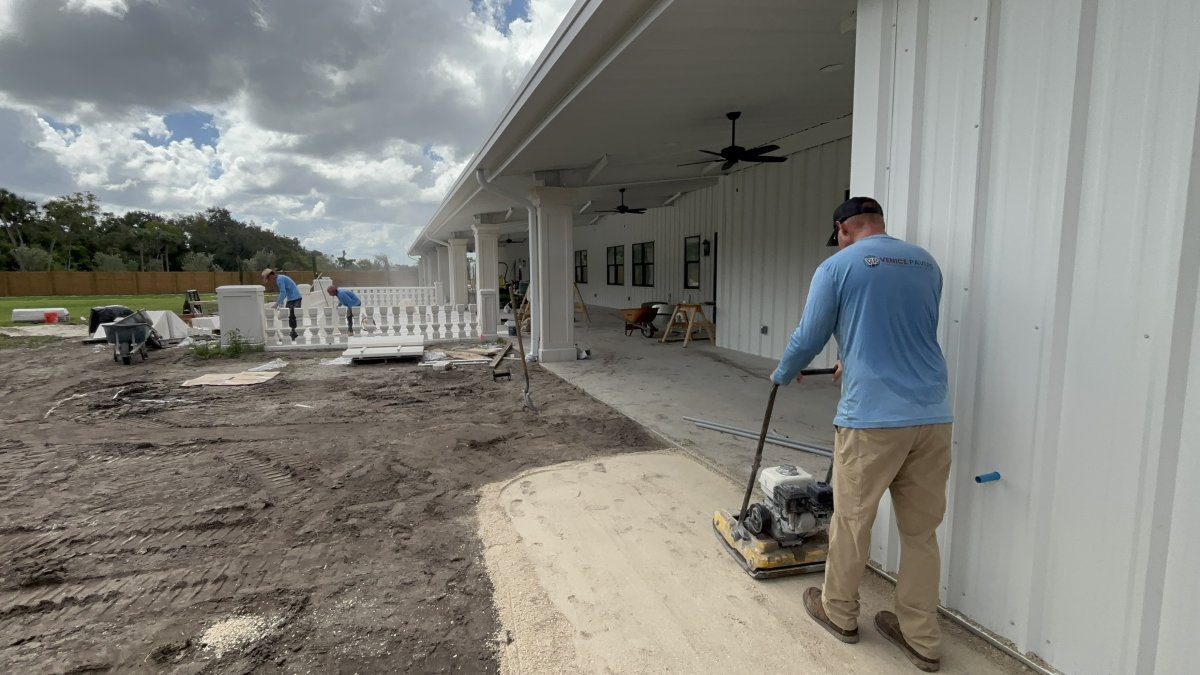
Use a plate compactor or hand tamper, depending on the area size:
- Plate compactor, Best for areas larger than 100 square feet. Makes multiple passes over the same area. Each pass compacts the material further.
- Hand tamper, Works for small areas or tight spaces. Requires more effort but gives you control.
Make at least 3 passes with a plate compactor over each lift. The material should feel solid and not shift under your feet. If stones still move when you walk on it, compact more.
Water the aggregate lightly between lifts. Slightly moist aggregate compacts better than dry material. But don’t oversaturate, soggy material won’t compact properly.
Continue until you’ve reached your target depth. The final surface should be firm, level, and stable.
Driveway Sub-Base Thickness: Getting the Depth Right
How thick should your sub-base be? It depends on what the driveway will carry.
For a standard residential driveway with passenger cars in South Florida, 2~3inches of compacted sub-base is typical. This handles normal traffic without settling.
If the driveway will see heavier use, delivery trucks, RVs, or commercial vehicles, increase the depth to 4~6 inches. The extra material distributes loads over a larger area and resists rutting.
The thickness also depends on your soil type. Weak soils (clay, silt) need thicker sub-bases. Strong soils (sand, gravel) can get by with less. If you’re unsure about your soil, err on the side of thicker. An extra 2 inches of material costs less than rebuilding a failed driveway.
Remember: this is compacted thickness. If you want 3 inches compacted, spread 4~5 inches loose and let compaction bring it down to 4 inches.
Driveway Base Compaction Equipment: Choosing the Right Tools
You don’t need expensive equipment, but you need the right tool for the job.
Plate compactor (vibrating or reversible), The workhorse for sub-base compaction. Weighs 150-300 pounds and covers larger areas quickly. Vibrating models work best for most aggregate.
Cost to rent: typically $200~$300 per day. Worth it for driveways over 200 square feet.
Hand tamper, A heavy flat-bottomed tool you lift and drop repeatedly. Good for small areas, tight spaces, or detail work. Less effective for large areas but requires no fuel or rental cost.
Free consultation & estimate →
Jumping jack compactor, Lighter than a plate compactor. Works for small to medium areas. Noisier and requires more effort than a plate compactor.
Roller compactor, Overkill for most residential driveways unless you’re doing a very large area.
For most homeowners, renting a plate compactor for a day is the best choice. It’s fast, effective, and not expensive. If your driveway is under 100 square feet, a hand tamper works fine.
What Happens If a Driveway Base Is Not Compacted
Skip sub-base compaction, and here’s what you get.
Settlement and sinking, Loose aggregate compacts under the weight of traffic. The surface sinks unevenly. Pavers crack. Edges drop. You develop a wavy, uneven driveway within 2-3 years.
Rutting and channelization, Heavy vehicles create ruts where wheels roll repeatedly. The aggregate shifts sideways and down.
Cracking and surface failure, As the base settles, pavers crack from the stress. Concrete develops spiderweb cracks. The surface breaks apart.
Poor drainage, Loose, uncompacted aggregate allows water to pool. Water seeps down, weakens the subgrade, and causes more settling.
Weed growth, Gaps in the base allow weeds to grow through. They spread roots that further destabilize the material.
Short lifespan, A poorly prepared driveway lasts 3-5 years. A properly compacted one lasts 20+ years. The difference is one day of work done correctly.
We’ve seen plenty of failed driveways that looked fine for the first year. Then the settling started. Then the cracks.
Preventing Settlement, Rutting, and Surface Failure
The best way to prevent these problems is to compact properly from the start. But there are other factors that help.
Proper drainage, Water is the enemy. Make sure water runs away from the driveway, not toward it. Slope the subgrade slightly. Use a permeable base material so water drains through, not pools on top.
Adequate thickness, Don’t skimp on sub-base depth. Thicker is better. It costs more upfront but saves money later.
Right material, Use crushed stone, not rounded gravel. Crushed stone locks together. Rounded gravel rolls around and doesn’t compact well.
Proper compaction, This is non-negotiable. Make multiple passes. Use the right equipment. Compact in lifts. Don’t rush.
Maintenance, Keep the surface clean and clear debris. Fill small cracks before they spread. Address settling early. A small repair now prevents a big failure later.
At Venice Pavers, we obsess over these details because we know they determine whether a driveway lasts 5 years or 25 years.
Drainage and Water Management Through Proper Compaction
Water destroys driveways. Proper sub-base compaction is part of water management.
A well-compacted sub-base allows water to drain through it, not pool on top.
Uncompacted material traps water. Water sits in the gaps between loose stones. It seeps down and weakens the subgrade. It freezes and thaws, heaving the surface. It promotes weed growth.
Slope matters, Grade your subgrade so water runs away from the driveway at least 1-2%. This prevents water from pooling at the edges, where it seeps into the base.
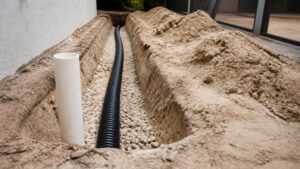
Edge drainage, Consider a perimeter drain if you’re in a low area or have poor natural drainage.
Surface drainage, Make sure your finished surface (pavers or concrete) also slopes away. Water should run off the top surface, not sit on it.
Base material selection, Crushed stone drains better than clay-heavy soil.
Proper compaction, combined with good drainage design, keeps water out of the base. And when water stays out, your driveway stays intact.
A durable driveway is built on a solid foundation. If you’re planning a new driveway and want to ensure it’s built right, we’d be happy to discuss your project. Venice Pavers offers a free consultation and estimate to review your site, assess drainage, and recommend the best approach for your specific situation.
Frequently Asked Questions
How thick should a driveway sub-base be?
Sub-base thickness depends on soil type, expected vehicle loads, and climate conditions. Most residential driveways benefit from 2.5~3 inches of compacted aggregate base material. Heavier-use areas or softer subgrades may require additional depth. A professional site assessment ensures your specific driveway receives the correct thickness for lasting structural support.
What happens if a driveway base is not compacted?
Uncompacted sub-base material settles unevenly under vehicle loads, causing rutting, channelization, and surface sinking. Water penetrates gaps between loose aggregate, eroding the base and accelerating pavement failure. Poor compaction also allows aggregate movement, which destabilizes the surface layer and shortens driveway lifespan by years. Proper compaction prevents these costly problems.
How do you know if a driveway sub-base is properly compacted?
A properly compacted sub-base resists foot pressure and vehicle loads without shifting or sinking. The surface should feel firm and stable underfoot. Professional contractors use compaction equipment to achieve consistent density across the entire base. Visual inspection for settled areas, ruts, or soft spots after initial use indicates whether compaction met structural standards.
Can I use any gravel for a driveway sub-base?
Not all aggregates perform equally. Crushed stone and granular base materials compact more effectively than rounded gravel or pit run. Angular aggregate particles lock together under compaction force, creating stable load-bearing capacity. Material gradation (mix of stone sizes) also matters for proper drainage and compaction. Selecting the right base material is as important as the compaction process itself.