Paver Cleaning, Sealing & Maintenance in Venice, FL
Keeping a paver driveway or patio looking good takes more than an occasional rinse. The surface, joint sand, and condition of the installation all deserve attention.
For homeowners in Venice, FL, a useful paver maintenance plan includes regular cleaning, checking joint sand and proper sand height, and evaluating when sealing is needed. Loose pavers, recurring standing water, and worn coatings should also be reviewed before new sealer is applied.
At Venice Pavers, our approach is to assess the surface, clean it appropriately, check the joint sand, and apply a compatible water-based sealer when the installation is ready.

Start With Regular Paver Maintenance
Sweep away leaves, grass clippings, and loose debris. Rinse ordinary dirt when needed, and address spills promptly with a cleaner suitable for your pavers and any existing sealer.
Pay attention to shaded areas, spots beneath trees, and places where irrigation regularly wets the pavement. If an area repeatedly stays damp or develops discoloration, check what is contributing to it.
During a quick walk around your driveway or patio, look for:
- Joint sand that has washed out or settled.
- Sand piled too high against the paver edges.
- Pavers that rock, sink, or sit above neighboring units.
- Stains that need targeted cleaning.
- Water collecting in the same location.
- Edges that appear to be spreading or moving.
These observations help determine whether the surface needs routine cleaning, joint-sand maintenance, repairs, or a sealing assessment.
Cleaning Pavers Before Sealing
Dirt, oil, rust, and organic growth do not necessarily respond to the same cleaning treatment. The cleaning method should match the surface and the problem.
Before applying a cleaner, confirm that it is appropriate for the paver material and any existing coating. Follow the product instructions and test an inconspicuous area when required.
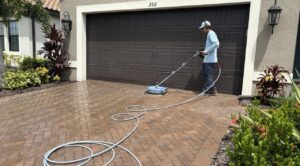
Pressure washing also requires care. Aggressive cleaning can disturb joint sand or affect the paver surface. Equipment and technique should suit the installation.
Cleaning is also an opportunity to inspect the joints. If sand has been displaced, its condition and height should be addressed before sealing.
Joint Sand and Proper Sand Height Matter
Joint sand fills the spaces between pavers and helps support the interlock of the pavement. Maintaining it is part of caring for the installation, not simply improving its appearance.
Check for low or missing joint sand
Look for joints that have become noticeably recessed or empty. Cleaning, runoff, and other site conditions can contribute to sand loss.
Repeated washout deserves a closer look. Replacing sand without addressing the cause may leave you repeating the same maintenance.
Do not fill sand to the top of the pavers
More sand is not automatically better. Joint sand should remain below the paver surface at the level specified for the paver and jointing system.
On many beveled pavers, the intended finished level is near the bottom of the chamfer—the sloped edge around the top of the paver. The exact requirement depends on the materials being used.
Proper height, not overfilled joints
At Venice Pavers, we check joint sand levels and touch up as needed before sealing. We do not top the sand off flush with the paver faces. Excess sand should also be cleared from the surface before sealer is applied.
Use a compatible sand and sealer system
Joint-sand products have different preparation and installation requirements. The sand and sealer should be selected as compatible parts of the maintenance plan, with the manufacturer’s instructions guiding installation and application.
Where a joint-stabilizing sealer is used, it can help bind properly prepared joint sand. That does not replace correct sand height, adequate joint filling, or repairs to an unstable installation.
Water-Based Paver Sealer Only—Never Oil-Based
For our South Florida paver projects, Venice Pavers uses water-based sealer only. We do not use oil-based paver sealers.
Product selection still depends on the paver material, surface condition, previous treatments, and the finish being requested. Water-based products are not all interchangeable.
If the pavers have been sealed before, let us know which product was used, if possible. An existing coating needs to be evaluated for compatibility before a new application.
Our paver sealing services in Venice include reviewing the surface and preparation needed before applying the new sealer.
What Does Paver Sealing Do?
Depending on the product, sealing may help resist certain stains, enhance color, and make routine maintenance easier. A suitable joint-stabilizing product can also help bind joint sand.
The appearance depends on the product and the pavers. Discuss color enhancement and sheen before work begins, rather than assuming every sealer produces the same look.
Sealing does not level a sunken driveway, stop a rocking paver, or correct a drainage problem. Those conditions need separate attention.
Preparation and application conditions also matter. Surface moisture, weather, application rate, and curing requirements should follow the selected product’s technical instructions.
How Often Should Pavers Be Resealed?
There is no single resealing interval that fits every driveway or patio. Product type, traffic, exposure, surface condition, and cleaning practices all affect the maintenance schedule.
Follow the sealer manufacturer’s guidance and assess the actual surface before scheduling another coat. A faded or dirty appearance alone does not establish that more sealer is needed.
Before resealing, determine whether the existing coating needs cleaning, additional preparation, or removal. Applying another coat without understanding the current surface can create avoidable problems.
Address Loose or Uneven Pavers Before Sealing
If sections have settled, shifted, or spread, have the installation assessed before proceeding with cosmetic maintenance.
The cause may involve the supporting layers, edge restraints, drainage, or another condition that sealing cannot correct.
Individual areas of a paver surface can often be lifted and worked on. The repair should address why the movement occurred, followed by appropriate joint-sand preparation and any planned sealing.
If you are considering a new driveway instead of maintaining the existing surface, explore our paver driveway installation services to discuss the options for your property.
Questions to Ask Before a Paver Cleaning and Sealing Job
A clear proposal should explain more than “clean and seal.” Ask:
- How will the pavers and any existing coating be assessed?
- Which cleaning methods and stain treatments are included?
- Will joint sand be checked and replenished where needed?
- What is the proper finished sand height for this installation?
- Do any pavers or edges need repair first?
- Which water-based sealer will be used, and what finish should I expect?
- How long must people, pets, and vehicles stay off the surface?
- What weather conditions are needed for application and curing?
- How should I maintain the pavers afterward?
These details make it easier to understand the work and compare estimates.
Keep Up With Maintenance After Sealing
Follow the curing instructions before returning furniture, walking on the surface, or parking vehicles. Keep irrigation and other water sources off the pavement for the period specified by your contractor and the product instructions.
Once the surface is ready for use, continue sweeping away debris, addressing spills promptly, and monitoring joint sand. Use cleaning products compatible with the sealer.
If you notice recurring joint-sand loss, persistent moisture, or an unexpected change in the coating, have it assessed before applying another product.
Ready to Refresh Your Pavers?
Venice Pavers can review your driveway, patio, or other paver surface and discuss the cleaning, joint-sand maintenance, and sealing it needs.
Our approach includes attention to proper sand height and water-based sealer only—never oil-based.
Explore Paver Sealing & Request an Estimate