Table of Contents
- Identify Where Water Collects on Your Driveway
- Assess Your Driveway Slope and Grading for Drainage
- Redirect Roof Runoff Away from Your Driveway
- Install a French Drain Along Your Driveway
- Add Surface and Channel Drains for Immediate Water Removal
- Use Permeable Pavers and Drainage-Friendly Materials
- Driveway Drainage Solutions That Match Your Site Conditions
- Prepare Your Driveway for Rainy Season
- Frequently Asked Questions
Last Updated: October 14, 2026
Identify Where Water Collects on Your Driveway
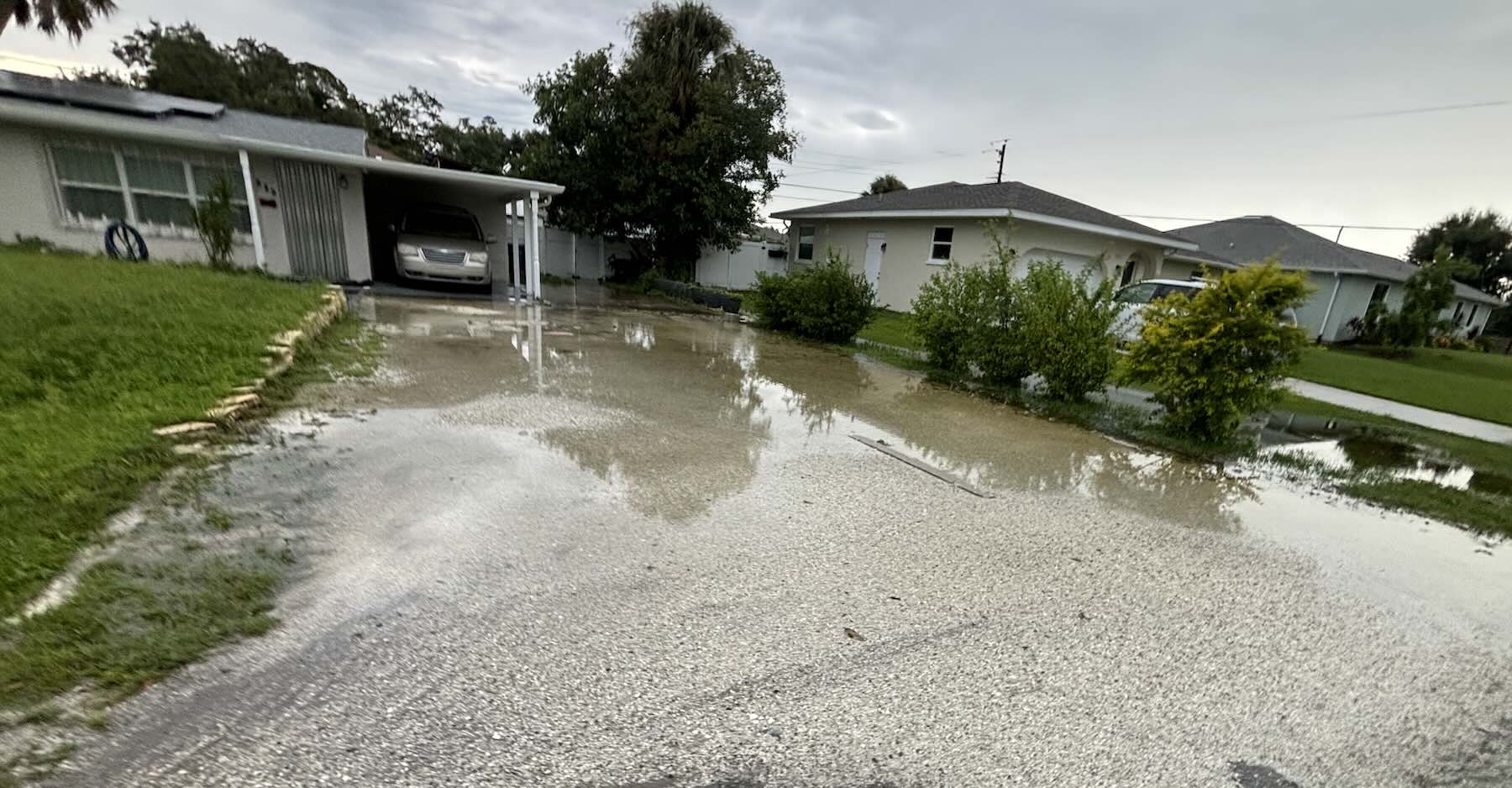
Standing water on your driveway signals drainage issues that worsen over time, causing cracks, erosion, and costly repairs. The first step to prevent driveway flooding is understanding where water pools and why.
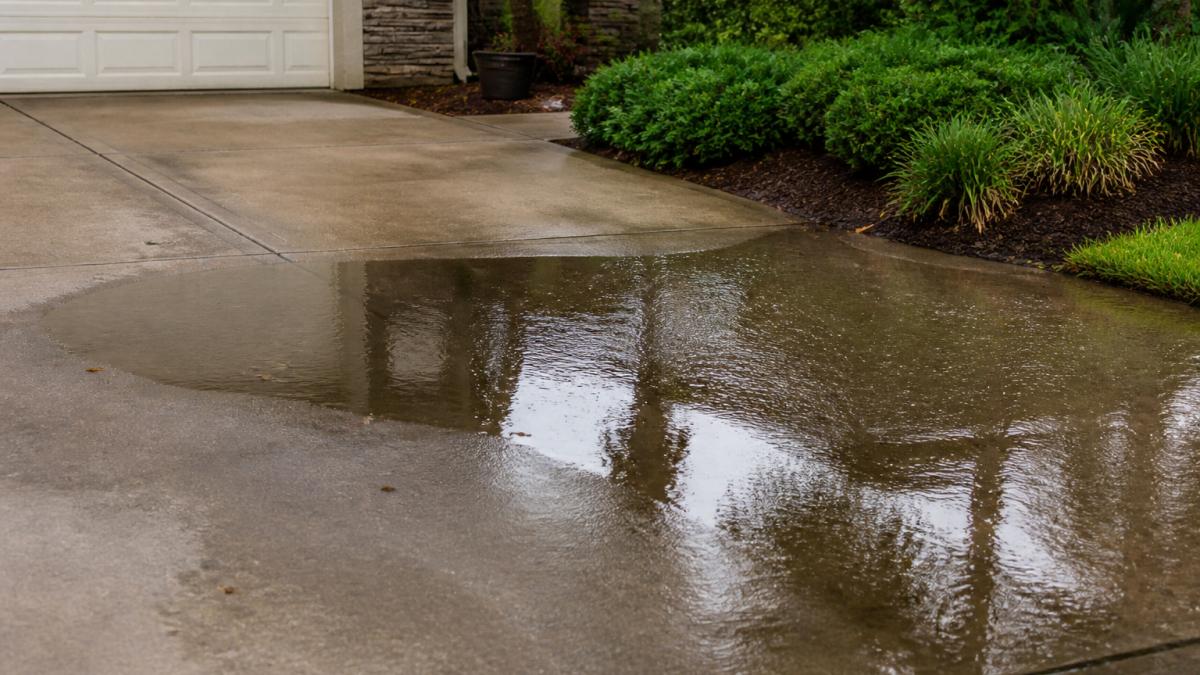
Spot standing water and low spots
After rain, walk your driveway and note where water sits. These low spots trap runoff instead of letting it flow away. Pay attention to:
- The center of the driveway (common settling point)
- Edges where the driveway meets the yard
- Areas near the garage entrance
Low spots develop over years as soil compacts and the base settles unevenly, which is why a solid, properly graded foundation matters.
Trace water flow from roof and gutters
Roof runoff is often the culprit, not rain falling directly on the driveway. Follow where your gutters and downspouts direct water, onto the driveway, or toward the foundation?
A single downspout can dump hundreds of gallons onto your driveway during heavy rain, making it a major contributor to flooding and pooling.
Assess Your Driveway Slope and Grading for Drainage
Proper grading is the foundation of driveway drainage, but “check your slope” is where most guides stop. A driveway-specific diagnostic tells you why water pools, and whether the fix is regrading, a drain, or both.
Run a driveway-specific diagnostic
Do this after a steady rain, while the water is still moving:
- Trace the source. Watch where water enters, falling on the slab, sheeting from the yard, or pouring from a downspout. Each source needs a different fix.
- Map the low points. Mark every spot where water sits minutes after rain stops, noting whether it’s in the center, along an edge, or at a joint.
- Check the cross-slope, not just the length. A driveway can slope toward the street and still pool if it’s flat across its width.
- Distinguish surface water from groundwater. A low spot wet for days after rain, or weeping in dry weather, may mean a high water table, which drains alone won’t fix.
- Confirm the discharge path. If water has nowhere legal or practical to go, regrading just moves the problem.
Measure the slope
You don’t need a surveyor. A 2-foot level with a 1/4-inch shim under one end gives roughly a 1% slope; a 1/2-inch shim gives about 2%.
Place the level on the surface, lift one end until the bubble centers, and measure the gap at several points along the length and width.
Read the clues in the surface
- Ponding in the center usually means the base has settled or the original grade was too flat.
- Water running toward the garage means the slope is reversed or the apron was poured wrong.
- Erosion at the edges points to runoff sheeting off the slab instead of being captured.
When to call a professional
If the driveway slopes toward the house, low spots exceed about an inch, or water stays for days, a contractor experienced in driveway grading can identify whether the fix is a surface regrade, a drain system, or a base rebuild. Regrading a concrete slab usually means removing and repouring sections or overlaying a new surface.
Redirect Roof Runoff Away from Your Driveway
Your gutters and downspouts are your first line of defense against driveway flooding. The key is directing captured roof water away from vulnerable areas.
Extend gutters and downspouts
Standard downspouts discharge just a few feet from your home, and that concentrated flow can overwhelm soil and cause erosion or flooding.
Options include:
- Rigid downspout extensions that attach permanently
- Flexible drain extensions that can be repositioned
- Underground drain lines that carry water away completely
The best choice depends on your yard layout and water volume; a contractor can help assess which approach works for your property.
Install gutter guards and clean regularly
Clogged gutters overflow during rain, dumping water onto the driveway instead of into the downspout system. Gutter guards reduce debris but aren’t foolproof; clean at least twice yearly, more often with trees overhead.
Install a French Drain Along Your Driveway
A French drain, a buried pipe surrounded by gravel, intercepts persistent standing water and surface runoff and channels it away from problem areas.
Plan the drain line and depth
French drains work best at the lowest point of your driveway or along its perimeter, with the line sloping gradually downward so gravity pulls water through.
Plan the discharge: outlet toward a storm drain, swale, or yard area where water can safely flow away.
Dig, add gravel and perforated pipe, and backfill
Installation involves excavating a trench, laying perforated pipe surrounded by drainage rock, and backfilling; the perforations let water in while gravel keeps soil out. This labor-intensive work benefits from professional expertise, wrong slope, inadequate gravel, or a poor discharge location can render the drain ineffective or create downstream problems.
Add Surface and Channel Drains for Immediate Water Removal
Surface drains and channel or deco drains (trench drains) capture water directly where it pools, collecting runoff and directing it underground or toward a safe discharge point.
Channel drains work well along the driveway edge where water collects, while surface drains suit localized low spots. Both require proper grading and a clear discharge path, without proper slope, even an excellent drain underperforms.
Use Permeable Pavers and Drainage-Friendly Materials
If you’re considering replacement or resurfacing, permeable pavers let water drain through the surface into a prepared base layer below, unlike solid concrete or asphalt.
Permeable paver systems include:
Free consultation & estimate →
- Porous concrete or asphalt surfaces
- Permeable pavers with open joints
- Recycled plastic or composite grids filled with gravel
These materials reduce pooling by design, draining water through the surface rather than letting it run off to low spots.
Driveway Drainage Solutions That Match Your Site Conditions
There’s no one-size-fits-all fix for driveway flooding. The right solution depends on your driveway material, the severity of the problem, your site’s slope and soil, and your budget and maintenance willingness.
Quick comparison of common fixes
|
Solution |
Best for |
Cost range |
Maintenance |
Limitations |
|---|---|---|---|---|
|
Downspout extensions |
Roof runoff hitting the driveway |
Varies |
Recheck after storms |
Only handles roof water |
|
Surface or channel drain |
Localized low spots, edges |
Moderate |
Clear grates seasonally |
Needs a discharge path |
|
French drain |
Persistent standing water, edge seepage |
Varies |
Flush line periodically |
Fails if slope or discharge is wrong |
|
Regrading |
Reversed or flat slope |
Varies |
Low once done |
May require removing surface |
|
Permeable pavers |
Full replacement, chronic runoff |
Varies |
Vacuum or sweep joints |
Needs correct base |
|
Rain garden or swale |
Yard-side discharge |
Varies |
Weeding, occasional reshaping |
Needs space and right soil |
Costs vary by region, access, and excavation needs, so treat these as relative ranges. Get at least two local estimates before committing.
For concrete driveways with poor slope
Concrete is rigid and won’t settle like asphalt, but poor initial grading can trap water indefinitely. Options for low spots include:
- Grinding or resurfacing to improve slope
- Installing surface or channel drains at problem areas
- Adding French drains along the driveway edge
Concrete resurfacing works for moderate slope issues; severe pooling usually needs a drain system. Some homeowners eventually replace concrete with a permeable alternative.
For asphalt surfaces with erosion
Asphalt degrades faster with poor drainage: water seeps into cracks, freezes and thaws, and accelerates deterioration. Edge erosion is another common sign.
Solutions for asphalt include:
- Seal-coating to slow water penetration
- Installing edge drains to intercept runoff
- Resurfacing to improve slope
Asphalt resurfacing is affordable but temporary, if the underlying drainage problem isn’t addressed, the new surface fails the same way. Fix drainage first to make the repair last.
For paver driveways with settling or base issues
Permeable pavers depend entirely on proper base preparation. If the base settles unevenly, water pools on the surface instead of draining through, and pavers shift, creating trip hazards.
When pavers sink or settle:
- Assess the base layer for compaction and drainage problems
- Rebuild the base if necessary to restore proper slope
- Reset pavers to correct elevation and alignment
Match the fix to the site, not just the material
Two driveways of the same material can need different fixes. Ask:
- How steep is the slope? Under 1% needs a drain; over 2% may just need the discharge path cleared.
- What’s the soil? Clay holds water and weakens French drains and rain gardens; sandy soil drains fast and may only need redirection.
- Where can water legally go? Discharging onto a neighbor’s property or into a public storm system can create liability or violate local rules. Confirm the outlet before you dig.
DIY versus professional
Simple fixes, extending downspouts, clearing gutters, adding a splash block, are reasonable DIY projects. Anything involving excavation, slope correction, or tying into a drainage system is worth a professional assessment, since a wrong slope or bad discharge point can worsen flooding.
Prepare Your Driveway for Rainy Season
Seasonal preparation minimizes damage during heavy downpours. A simple checklist keeps your driveway ready.
Spring and early summer checklist
Before rainy season arrives, take these steps:
- Clean gutters and downspouts thoroughly
- Extend downspouts away from the driveway
- Inspect the driveway for cracks and seal them
These tasks take a few hours but prevent much bigger problems, a small crack sealed now won’t become a major leak.
During heavy rain: temporary measures
When storms arrive, you can take immediate action to protect your driveway:
- Clear gutters and downspouts of debris
- Position sandbags or barriers to redirect water away from low spots
- Use a pump or wet-dry vacuum to remove standing water if pooling occurs
The difference between a driveway that sheds water and one that floods comes down to planning and execution.
At Venice Pavers, we’ve spent over 30 years perfecting base preparation and drainage planning for hardscape installations.
Ready to stop worrying about water pooling on your driveway?
Frequently Asked Questions
How do I find the cause of driveway flooding?
Start by observing where water pools during or after rain. Check your roof gutters and downspouts—water flowing directly onto the driveway is often the culprit. Look for low spots or depressions in the driveway surface. Trace the natural slope of your yard; water runs downhill, so identify if your driveway sits in a low point. Poor grading or compacted soil that prevents water from draining away will also cause flooding. A professional can assess slope, soil permeability, and subsurface water movement to pinpoint the exact cause.
Can I install a French drain along my driveway myself?
A French drain is a manageable DIY project if you have basic tools and understand the steps: dig a trench along the problem area, slope it toward a safe discharge point, add landscape fabric, gravel, and perforated drain pipe, then cover and backfill. However, accuracy matters. If your slope is wrong, the drain won’t work. If you hit utilities, you risk serious injury. If the discharge point violates local drainage codes, you could face fines. Many homeowners benefit from having a professional verify the plan and slope before digging, or handle the installation entirely.
What’s the difference between permeable pavers and regular concrete or asphalt?
Permeable pavers allow water to drain through the surface and base layers instead of pooling on top. They sit on a gravel base that absorbs and filters water, reducing runoff and flooding. Regular concrete and asphalt are solid, nonporous surfaces—water runs off them and collects in low spots. Permeable pavers reduce erosion, protect your driveway from standing water damage, and can reduce the need for additional drainage systems. They cost more upfront but last longer and eliminate many flooding problems at their source.
When should I call a professional about driveway flooding?
Call a professional if standing water persists after rain, if you see erosion or soil loss around your driveway, if the driveway is cracking or settling, or if water is pooling near your foundation or neighbors’ properties. Also reach out if your property has complex grading, if you’re unsure about local drainage codes and safe discharge points, or if DIY solutions haven’t worked. A professional can diagnose the root cause, recommend the right solution for your site conditions, and ensure the work meets code and protects your property long-term.